AI promised to save us time - instead it created a new kind of burnout
A UC Berkeley study tracks 200 employees for 8 months and finds AI tools boost output but eliminate cognitive recovery breaks, creating a new form of burnout. Here's what's happening and what helps.
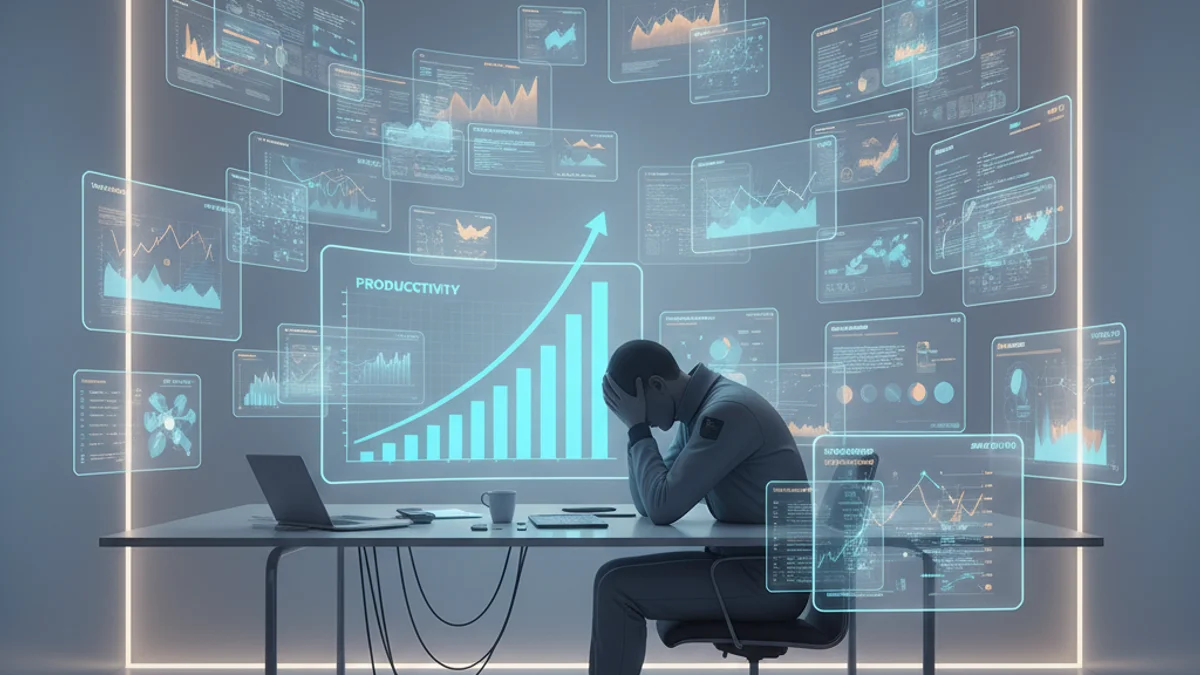
Artificial intelligence tools promised to return free evenings. A UC Berkeley study tracks 200 employees at a technology company for eight months and finds the reverse. Workers complete more tasks but their cognitive load increases, breaks vanish and burnout rises. Harvard Business Review, Fortune and TechCrunch report the research and label the pattern “productivity trap”: you finish more, expectations rise and the workday never ends.
What the UC Berkeley study shows
Researchers observe employees before and after the company introduces AI assistants for writing, data analysis and scheduling. Individual output grows about 35%. Three other metrics shift downward:
- Break time falls 20%: tasks that once let the mind rest (formatting reports, sorting email) now end instantly, and built-in recovery disappears
- Decision density increases: once routine work is delegated, every remaining task requires judgment, strategy or creativity
- Work-life boundaries fade: because AI tools make tasks feel brief, employees open them at 9 PM “just for five minutes”
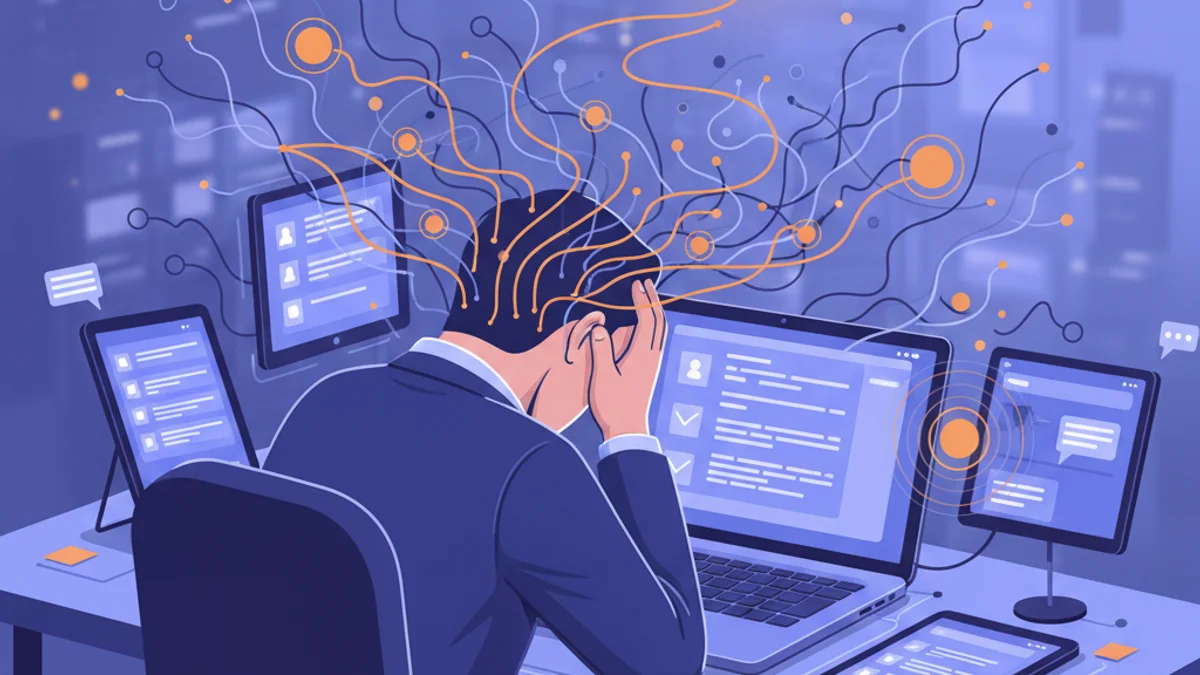
Harvard Business Review summarizes the result: AI does not shrink work, it compresses and intensifies it. The tools remove low-demand activities that once gave the brain a rest, leaving an even flow of high-stakes choices.
Why your brain needs “boring” tasks
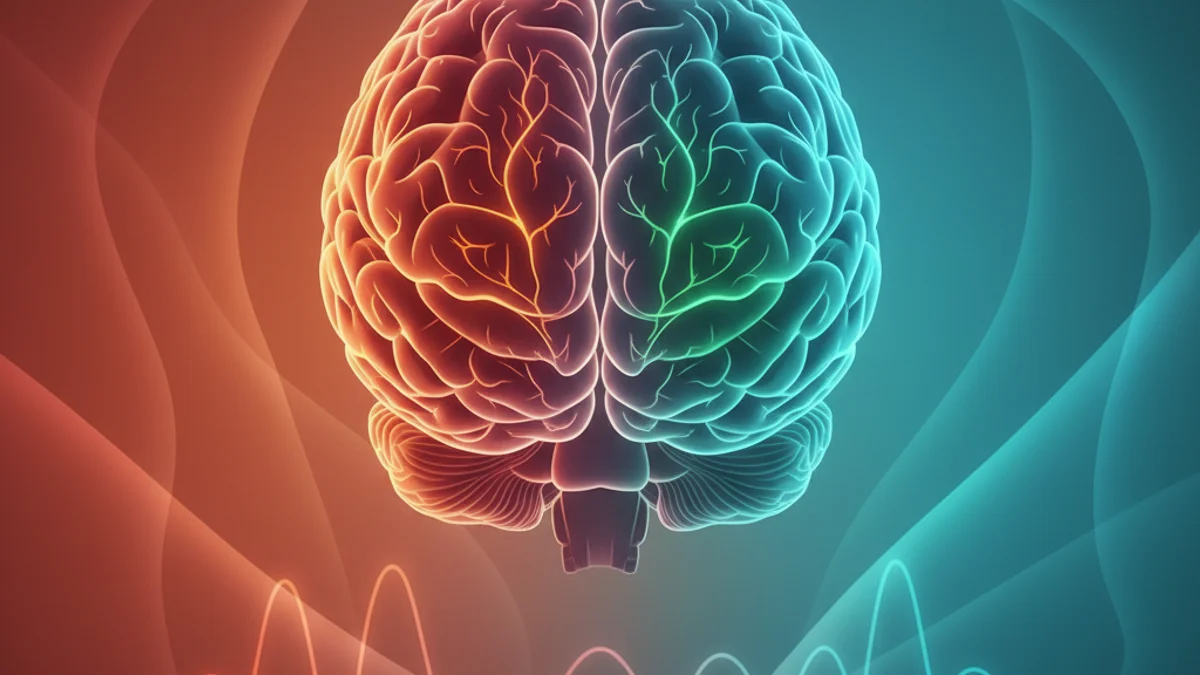
Neuroscience labels the resting state of the mind during routine work the default mode network (DMN). This network switches on when no specific goal demands attention: while you fold laundry, walk to a meeting or reformat a spreadsheet. It consolidates memories, plans the future and processes emotions.
When AI erases those low-demand intervals, the DMN receives fewer opportunities to activate. The brain remains in task-positive mode for extended periods and exhausts glucose and neurotransmitters. The outcome is mental fatigue, disturbed sleep and irritability, the first markers of burnout.
Removing “boring” tasks appears beneficial but it resembles deleting rest days from an athletic schedule. Performance spikes briefly then collapses.
How to recognize AI-driven burnout
AI burnout differs from traditional overwork: people seldom sense classic overload and they often feel productive instead. Watch for these signs:
- Decisions become more difficult as the day ends: not because you logged extra hours but because each hour required peak mental effort
- Creative tasks fail first: writing, problem-solving and strategic planning drop in quality before routine duties do
- You inspect AI results obsessively: checking, editing and re-prompting turns into its own exhausting cycle
- Rest no longer restores: a weekend away fails to refill your tank, because the shortage is mental, not bodily
Strategies for cognitive recovery
Both the UC Berkeley study and the TechCrunch article agree on one principle: the answer is not to abandon AI but to weave planned recovery into the workday. Data support the following methods:
Lock in breaks that cannot be skipped. Start a timer. Walk without the phone. The default mode network needs ten to fifteen minutes of free time to switch on. Do not swap the pause for a podcast or news feed, because that still counts as input.
Schedule low-demand tasks on purpose. Hand-write notes, tidy a desk or sketch on paper. Those simple actions let the brain downshift. This is not waste, it is upkeep.
Set firm limits on AI use. Choose the hours when you will touch AI tools and the hours when you will not. The “just five minutes” habit at 9 PM is a pattern the study calls out.
Turn to neuromodulation for guided recovery. When fatigue runs deep, passive rest often falls short. Audio-visual entrainment (AVE) pairs light pulses with sound beats to nudge brainwaves toward alpha and theta rhythms linked to recovery. The 6th Mind app supplies brief AVE sessions built for this goal, a clinically grounded reset that needs no willpower or meditation skill.
Track the true load on your mind, not the clock. Eight hours packed with decisions exhausts more than twelve hours that mix in routine chores. Note how you feel after work, not only when you exit the building.
What employers can get wrong
The TechCrunch piece warns of a repeated error: firms react to AI burnout stats by handing out wellness apps or resilience classes, while simultaneously raising output quotas because “AI makes everyone faster.” This misses the mark. Workers do not lack coping tools: the quiet truth is that cognitive demand has doubled.
The study shows that companies must revise how much work they demand when they adopt AI, not wait until harm occurs and then offer repair programs.
The bottom line
AI tools deliver real value. The problem lies in the belief that any time saved must convert into extra tasks. The human brain requires periods without focus, and once those gaps vanish, burnout appears, even when the overall count of hours remains unchanged.
If your job now includes AI and you notice a fatigue that two days off do not relieve, you probably face the condition the Berkeley team outlines. The initial step is to call it by name. The next is to schedule recovery periods during the day with the same purpose you assign to output.
Sources
- “AI Doesn’t Reduce Work — It Intensifies It” - Harvard Business Review, 2026
- “The first signs of burnout are coming from the people who embrace AI the most” - TechCrunch, 2026
- “UC Berkeley Study Reveals AI Boosts Productivity But Increases Worker Burnout” - Fortune, 2026