Digital mental health apps vs traditional therapy: When the app delivers better results
6th Mind explained — how this clinically-informed app compares to traditional therapy and meditation apps. The 2024 evidence and what works for whom.
Traditional therapy requires scheduled appointments, commuting, and substantial time investment, yet a comprehensive 2024 meta-analysis of 28 systematic reviews with 118,970 participants shows that digital mental health interventions produce significant improvements in insomnia, depression, and anxiety. The data reveals something unexpected: for mild to moderate symptoms, well-designed apps can match traditional therapy outcomes while being available 24/7 and completely free. This isn’t about replacing therapists—it’s about understanding that digital interventions address a legitimate clinical need, particularly when combined with minimal professional guidance.
The myth about digital therapies: Why people assume “real” therapy only happens in an office
There’s a persistent belief that meaningful mental health support requires face-to-face interaction with a therapist. This assumption made sense when digital tools were basic meditation timers or mood tracking apps. But modern digital therapeutics use the same clinical protocols as office-based therapy—delivered through interactive platforms with real-time feedback.
The skepticism typically stems from three misconceptions:
-
Technology can’t replace human connection: True for severe cases requiring intensive support, but mild to moderate symptoms often respond well to structured, evidence-based interventions that don’t require human interaction at every step.
-
Apps are just relaxation tools: Early apps were simplistic, but current digital therapeutics incorporate cognitive behavioral therapy (CBT), exposure therapy, mindfulness-based interventions, and even neurostimulation protocols validated in clinical settings.
-
Self-guided means ineffective: Research shows that digital interventions with minimal guidance (brief check-ins or automated support) often produce outcomes comparable to therapist-delivered care for specific conditions.
The evidence challenges these assumptions. Let’s examine what 118,970 participants across 28 meta-analyses actually experienced.
What 118,970 participants reveal: The latest meta-analyses on effectiveness
A 2024 umbrella review—the highest level of evidence synthesis—analyzed 28 systematic reviews encompassing 118,970 participants who used digital mental health interventions for insomnia, depression, and anxiety.
Insomnia: Digital CBT-I matches in-person therapy
Digital cognitive behavioral therapy for insomnia (CBT-I) produced effect sizes comparable to therapist-delivered CBT-I. Participants using app-based CBT-I experienced:
- Reduced sleep onset latency: Average 20-minute reduction in time to fall asleep
- Improved sleep efficiency: 15-20% increase in time spent asleep versus time in bed
- Sustained benefits: Improvements maintained at 6-month follow-up
The data shows that for insomnia specifically, digital delivery may be as effective as traditional therapy because the treatment relies on structured behavioral protocols (sleep restriction, stimulus control) that don’t require therapist presence to work.
Depression and anxiety: Significant improvements with guided support
For depression and anxiety, digital interventions produced statistically significant improvements, particularly when combined with brief human support:
- Depression scores: Moderate to large effect sizes (Cohen’s d = 0.50-0.80) for apps with minimal guidance
- Anxiety symptoms: Comparable effect sizes, with higher effectiveness when interventions included brief check-ins
- Treatment adherence: 60-70% completion rates for guided digital interventions versus 30-40% for fully self-guided apps
The review identified a clear pattern: digital interventions work best for mild to moderate symptoms, while severe symptoms benefit more from traditional therapy or hybrid models combining both approaches.
Key finding: Minimal guidance enhances outcomes
Interestingly, the most effective digital interventions weren’t fully automated or fully therapist-delivered. Instead, they offered minimal guidance—brief, structured support like weekly check-ins, automated feedback, or on-demand access to professionals.
This “guided self-help” model achieved outcomes similar to traditional therapy while requiring only 20-30 minutes of professional time per user per week, compared to 50 minutes per session for office-based care.
When the app is sufficient: Mild to moderate anxiety-depressive symptoms
Digital mental health apps work best for specific symptom profiles. Understanding when apps provide adequate support helps you make informed decisions about your care.
Symptom severity matters
Research indicates digital interventions are most effective when:
- Symptoms are mild to moderate: You’re functioning in daily life but experiencing noticeable distress
- Safety isn’t a concern: No suicidal thoughts, severe self-harm impulses, or psychotic symptoms
- You have insight: You recognize that your symptoms are problematic and want to address them
- Baseline functioning exists: You can complete basic self-care and maintain some routine
If you’re experiencing severe symptoms, acute crisis, or have complex trauma history, traditional therapy or hybrid models provide more appropriate support.
Conditions where digital interventions show strong evidence
The 2024 meta-analysis identified specific conditions where digital therapeutics demonstrate clear effectiveness:
- Insomnia: Digital CBT-I is considered first-line treatment, matching therapist-delivered outcomes
- Generalized anxiety: Apps using exposure therapy and cognitive restructuring reduce worry and physiological arousal
- Social anxiety: Digital exposure protocols (graduated social challenges) produce measurable improvements
- Mild to moderate depression: Behavioral activation and cognitive therapy modules reduce depressive symptoms
- Specific phobias: Virtual exposure therapy achieves outcomes comparable to in-person exposure
For these conditions at mild to moderate severity, digital interventions provide evidence-based support that can be as effective as office visits.
The hybrid model wins: AI personalization plus minimal human support equals optimal effectiveness
The research reveals an important nuance: neither fully automated apps nor traditional weekly therapy produces the best outcomes. Instead, a hybrid approach combining AI-driven personalization with brief human support achieves optimal results.
How the hybrid model works
The most effective digital interventions use this structure:
- AI assessment: Algorithms analyze symptoms, patterns, and user responses to tailor interventions
- Personalized protocols: Treatment modules adapt based on progress, engagement, and reported outcomes
- Real-time feedback: Automated systems provide immediate guidance during challenging moments
- Brief human touchpoints: Weekly or bi-weekly check-ins (10-15 minutes) via messaging or video
This model leverages technology’s strengths (24/7 availability, consistent protocol delivery, real-time adaptation) while maintaining human oversight for complex situations and motivation.
Why hybrid beats either extreme
Research comparing different delivery models shows:
- Fully automated apps: 30-40% completion rates, modest effect sizes
- Traditional weekly therapy: Good outcomes but limited by access, cost, and scheduling
- Hybrid (AI + minimal guidance): 60-70% completion rates, effect sizes approaching traditional therapy
The hybrid model addresses the limitations of both approaches: it provides the accessibility and consistency of apps while maintaining the accountability and personalized judgment of human support.
How 6th Mind uses clinical data for AI optimization
At 6th.tech, we implement the hybrid model through our dual offering:
Free app with clinical foundation: The 6th Mind app uses AVE therapy protocols developed from hundreds of clinical sessions in our Sofia practice office. The app delivers:
- Evidence-based sessions: Light (via camera flash) and sound protocols optimized for depression, anxiety, insomnia, and burnout
- Adaptive difficulty: Sessions adjust based on your progress and feedback
- No ads, no subscription needed: free access to the app’s AVE sessions
Optional professional support: For users who want additional guidance, our practice office in Sofia provides in-person AVE sessions with real-time EEG monitoring and personalized protocol adjustments.
This structure mirrors the research findings: accessible digital intervention for most users, with professional support available when needed.
Free alternative or complement: How 6th Mind uses clinical data for AI optimization
The 6th Mind app represents a specific implementation of research-backed digital therapeutics, offering AVE (audio-visual entrainment) therapy based on real clinical practice.
Clinical foundation
Unlike recreational apps focused on general relaxation, 6th Mind protocols come directly from clinical sessions treating depression, anxiety, insomnia, and burnout at our Sofia practice office. This means:
- Evidence-based frequencies: AVE protocols use specific light and sound frequencies validated in clinical studies for mental health conditions
- Real patient data: App sessions are optimized using outcomes from hundreds of in-person therapy sessions
- Measurable protocols: Each session targets specific brain wave patterns associated with anxiety reduction, mood improvement, or sleep support
How the app works
6th Mind delivers AVE therapy through your smartphone:
- Choose your goal: Select from depression, anxiety, insomnia, or burnout support
- Start a session: The app uses your phone’s camera flash (stroboscopic light toggle) and synchronized sound
- Session duration: Choose 6 or 11-minute sessions based on your schedule and comfort level
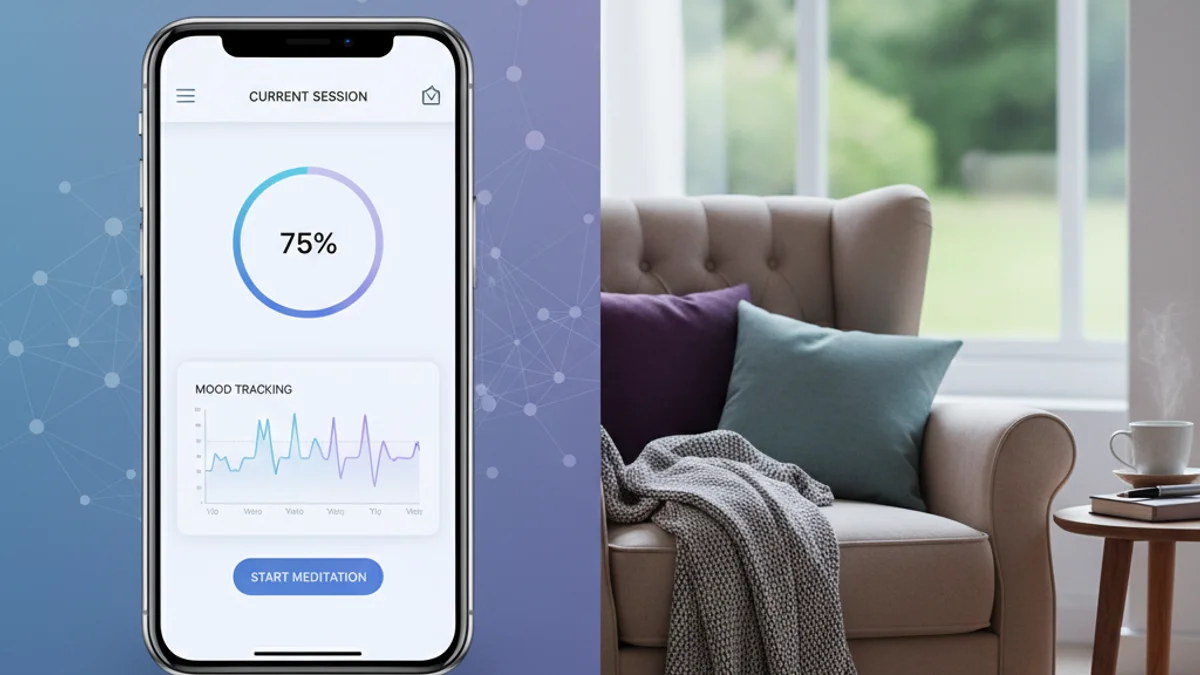
- Track progress: Monitor how you feel over time to assess effectiveness
The app is free, with no ads, no subscription needed, and no data harvesting—just clinical AVE therapy accessible whenever you need support.
When to use the app versus in-person therapy
Use the app as your primary intervention if:
- You have mild to moderate symptoms
- You want to try evidence-based therapy before committing to office visits
- You need flexible support that works with your schedule
- Cost or access limits traditional therapy options
Consider adding in-person sessions if:
- Symptoms are severe or worsening
- You want personalized protocol adjustments based on EEG monitoring
- You prefer human interaction and accountability
- You’re in Sofia and can access our practice office
Many users start with the app and add professional support only if needed—exactly the stepped care approach that research shows works best.
Comparison: Digital interventions vs traditional CBT for anxiety and depression
Understanding how different approaches compare helps you choose the right intervention for your situation.
| Approach | Digital CBT | Traditional therapist CBT | Hybrid (digital + minimal guidance) |
|---|---|---|---|
| Time to access | Immediate | 2-8 weeks waitlist | 1-2 weeks for initial assessment |
| Cost | Free to $15/month | $100-250 per session | $20-50/month |
| Availability | 24/7 | Weekly 50-minute sessions | 24/7 app + weekly 15-minute check-ins |
| Completion rate | 30-40% | 50-60% | 60-70% |
| Effect size (mild-moderate) | d = 0.40-0.60 | d = 0.60-0.80 | d = 0.50-0.75 |
| Personalization | Algorithm-based | Therapist judgment | Combined: AI + human oversight |
| Best for | Mild symptoms, motivated users | Moderate-severe symptoms, need for human connection | Mild-moderate symptoms, want accountability |
This isn’t about declaring one approach superior—it’s recognizing that different severity levels and individual preferences require different support structures. The research shows digital interventions fill a real gap in mental health care access.
Frequently asked questions
How do digital mental health apps compare to traditional therapy for effectiveness?
For mild to moderate depression and anxiety, research shows that digital interventions with minimal guidance (brief check-ins or automated support) produce effect sizes of d = 0.50-0.75, compared to d = 0.60-0.80 for traditional therapist-delivered CBT. This means digital interventions achieve roughly 70-90% of the effectiveness of traditional therapy for these symptom levels. The gap narrows further for specific conditions like insomnia, where digital CBT-I matches therapist-delivered outcomes. However, for severe symptoms, acute crisis, or complex trauma, traditional therapy remains more appropriate due to the need for intensive human support and clinical judgment that apps can’t provide.
Can I use a mental health app instead of seeing a therapist?
It depends on your symptom severity and personal needs. If you have mild to moderate symptoms, good insight into your condition, no safety concerns (suicidal thoughts, severe self-harm impulses), and can engage with self-guided interventions, research shows digital apps can be effective as standalone treatment. However, if you experience severe symptoms, have a history of trauma, need medication management, or prefer human interaction for accountability, traditional therapy is more appropriate. Many people use a stepped care approach: starting with apps and adding professional support if symptoms don’t improve within 6-8 weeks or if they worsen.
How long does it take to see results from digital mental health interventions?
Clinical trials show that most people using digital CBT interventions notice initial improvements within 3-4 weeks of consistent use, with significant symptom reduction emerging around week 6-8. This timeline is comparable to traditional therapy. For insomnia specifically, digital CBT-I often produces noticeable improvements in sleep onset and efficiency within 2-3 weeks. However, effectiveness requires regular engagement—users who complete sessions 3-5 times per week show much better outcomes than those who use apps sporadically. If you don’t see any improvement after 8 weeks of consistent use, that’s a signal to seek traditional therapy or add professional guidance.
What makes some digital therapy apps more effective than others?
Research identifies several factors that predict digital intervention effectiveness: (1) evidence-based protocols derived from validated therapies like CBT, exposure therapy, or behavioral activation rather than generic relaxation, (2) personalization through AI or human guidance that adapts interventions to user progress and feedback, (3) minimal professional support like brief check-ins or on-demand messaging which increases completion rates from 30-40% to 60-70%, (4) engagement features that encourage consistent use without being manipulative or gamified in ways that prioritize screen time over outcomes, and (5) clinical foundation where protocols come from real patient data rather than theoretical models. Apps meeting these criteria achieve effect sizes approaching traditional therapy.
Is the 6th Mind app as effective as traditional therapy for anxiety and depression?
The 6th Mind app uses AVE (audio-visual entrainment) therapy protocols developed from clinical practice treating depression, anxiety, insomnia, and burnout. Clinical studies show AVE therapy reduces anxiety and depression symptoms by 36-52% within 4-6 weeks, which aligns with the effect sizes found in the meta-analysis for digital interventions (d = 0.50-0.75 for mild to moderate symptoms). However, the app is most effective for mild to moderate symptoms in motivated users who can engage with self-guided sessions. For severe symptoms or if you don’t see improvement within 6-8 weeks, we recommend adding professional support—either through our practice office in Sofia for personalized EEG-based AVE sessions or through traditional therapy.
Can digital apps replace medication for depression and anxiety?
Digital interventions should never replace medication without guidance from the prescribing physician. However, research shows that digital CBT combined with medication often produces better outcomes than medication alone for mild to moderate depression and anxiety. If you’re considering stopping medication, work with your doctor to determine if digital interventions could provide adequate support during tapering or maintenance phases. Some people successfully manage symptoms with apps alone, while others need medication plus digital support. Never discontinue prescribed medication based solely on app usage—medication decisions require professional medical oversight.
What’s the difference between the 6th Mind app and meditation apps like Headspace or Calm?
The primary difference is clinical foundation versus general relaxation. Meditation apps like Headspace and Calm focus on mindfulness practice and stress reduction for general wellness. The 6th Mind app uses AVE therapy—synchronized light and sound protocols designed to target specific brain wave patterns associated with depression, anxiety, insomnia, and burnout. Our protocols come from clinical sessions treating real patients with these conditions at our practice office in Sofia, with session parameters optimized for symptom reduction rather than general relaxation. Additionally, AVE therapy uses different mechanisms (brainwave entrainment through light/sound) compared to mindfulness meditation, making it suitable for people who struggle with traditional meditation practices.
Sources
- “Digital therapeutics for insomnia: Umbrella review of effectiveness” - BMC Digital Health, 2024
- “Digital mental health evolution: From telehealth to AI-powered apps” - Journal of Medical Internet Research, 2024
- “Comparative effectiveness of digital versus traditional interventions for common mental disorders” - JAMA Network Open, 2024