
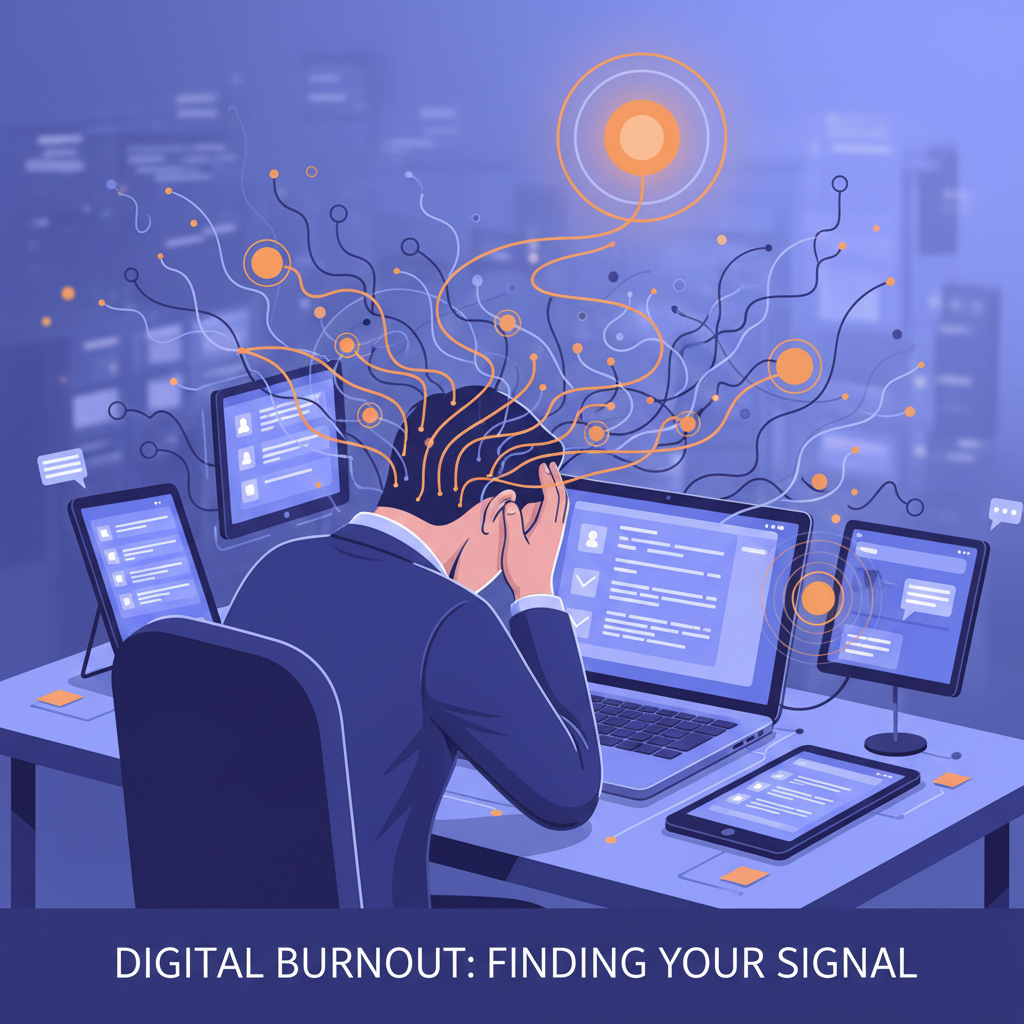
The numbers are staggering: research from 2024-2025 shows that 82% of employees are at risk of burnout, with Gen Z reaching peak burnout at just 25 years old - 17 years earlier than previous generations. If you’re reading this and feeling exhausted, you’re not alone. But here’s the good news: understanding what’s happening in your brain during burnout is the first step toward recovery.
The statistics you need to know
Technology has fundamentally changed how we work, but our brains haven’t evolved to keep up. Recent studies reveal alarming trends:
- 82% of workers are at burnout risk - This isn’t just about working hard; it’s about how technology has made us constantly accessible
- Gen Z hits burnout 17 years earlier - Reaching peak exhaustion at 25 instead of the traditional 42
- 58% are “always connected” to work - No true downtime for the brain to recover
- 45% fear AI job replacement - Creating chronic anxiety on top of existing stress
- 53% feel anxious about rapid tech pace - Constant pressure to adapt and learn
These aren’t just numbers. They represent real people experiencing chronic stress, insomnia, anxiety, and depression as technology blurs the line between work and rest.
Why technology exhausts your brain
Your brain is an incredible organ, but it wasn’t designed for the digital age. Here’s what’s happening:
Constant connectivity drains mental resources
When 58% of employees report being “always available,” there’s no recovery time. Your prefrontal cortex - responsible for decision-making, focus, and emotional regulation - becomes depleted. Like a smartphone battery that never gets to fully recharge, your cognitive capacity diminishes over time.
AI anxiety creates chronic stress
45% of workers worry that AI will replace their jobs. This isn’t just psychological stress - it triggers your body’s fight-or-flight response repeatedly throughout the day. Chronic stress floods your system with cortisol, disrupting sleep, weakening immunity, and making it harder to think clearly.
Information overload and FOMO
The fear of missing out on information creates a constant state of hypervigilance. Your brain is bombarded with notifications, messages, and updates, never getting the quiet time needed for deep work or genuine rest.
What happens in your brain during burnout
Burnout isn’t just “being tired.” It’s a state of chronic stress that changes your brain:
- Prefrontal cortex exhaustion - The part of your brain responsible for complex thinking and emotional regulation becomes depleted
- Neurotransmitter imbalance - Serotonin, dopamine, and other crucial brain chemicals fall out of balance
- Chronic stress response - Your amygdala (fear center) becomes overactive while your hippocampus (memory center) shrinks
- Sleep disruption - Technology use before bed suppresses melatonin, preventing restorative sleep
The result? You feel mentally foggy, emotionally exhausted, and physically drained even after a full night’s sleep.
Science-based solutions for recovery
The good news is that your brain is remarkably adaptable. Here are evidence-based approaches that address the root cause:
Energy management over time management
Research from 2025 shows that managing your energy - not your time - is key to preventing burnout. This means:
- Identifying your “biological prime time” - when your brain naturally performs best
- Taking regular breaks to allow prefrontal cortex recovery
- Setting clear boundaries for technology use
Digital detox protocols
Create specific times when you’re completely disconnected:
- No work emails after 7 PM
- Phone-free mornings for the first hour after waking
- Tech-free zones (bedroom, dinner table)
AVE therapy for brain rebalancing
Audio-Visual Entrainment (AVE) therapy uses synchronized light and sound to help rebalance brain waves. Clinical research shows that AVE can:
- Reduce stress hormones
- Improve sleep quality
- Restore neurotransmitter balance
- Help the prefrontal cortex recover
Unlike meditation apps that require effort, AVE therapy works directly with your brain’s natural rhythms. Sessions can be as short as 15-20 minutes and provide measurable improvements in stress levels and sleep quality.
For those seeking clinical methods for managing burnout, personalized AVE therapy with EEG assessment is available at specialized practice offices.
Practical steps to start today
You don’t need to overhaul your entire life. Start with these evidence-based practices:
- Set communication boundaries - Turn off work notifications outside office hours
- Schedule recovery blocks - 15-minute breaks every 90 minutes of focused work
- Create a wind-down routine - 30 minutes before bed with no screens
- Try AVE therapy - Clinically validated approach to help your brain recover faster
- Track your progress - Use standardized questionnaires to measure improvement objectively
The path forward
Technology burnout is a real neurological condition, not a personal failing. With 82% of employees at risk, we need to recognize that the problem isn’t just individual - it’s systemic. But while we work toward better workplace policies, you can take steps now to help your brain recover.
Whether you choose clinical therapy for personalized AVE sessions or use the 6th Mind app for free science-based support sessions, the key is addressing the root cause: giving your exhausted brain the recovery it desperately needs.
Download the 6th Mind app for free science-based sessions designed to help your brain recover from chronic stress and burnout.
Sources:
- “Burnout and stress: new insights and interventions” - Nature Scientific Reports, 2025
- “The State of Workplace Burnout in 2025: A Comprehensive Research Report” - The Interview Guys, 2025
- “Technology is Contributing to Employee Burnout” - Calm Health, 2024