The hidden link between blood sugar and anxiety: What continuous glucose monitors reveal
Continuous glucose monitoring reveals blood sugar instability correlates strongly with anxiety, irritability, and cognitive fog. Some patients with generalized anxiety disorder achieved complete symptom resolution through dietary changes alone.
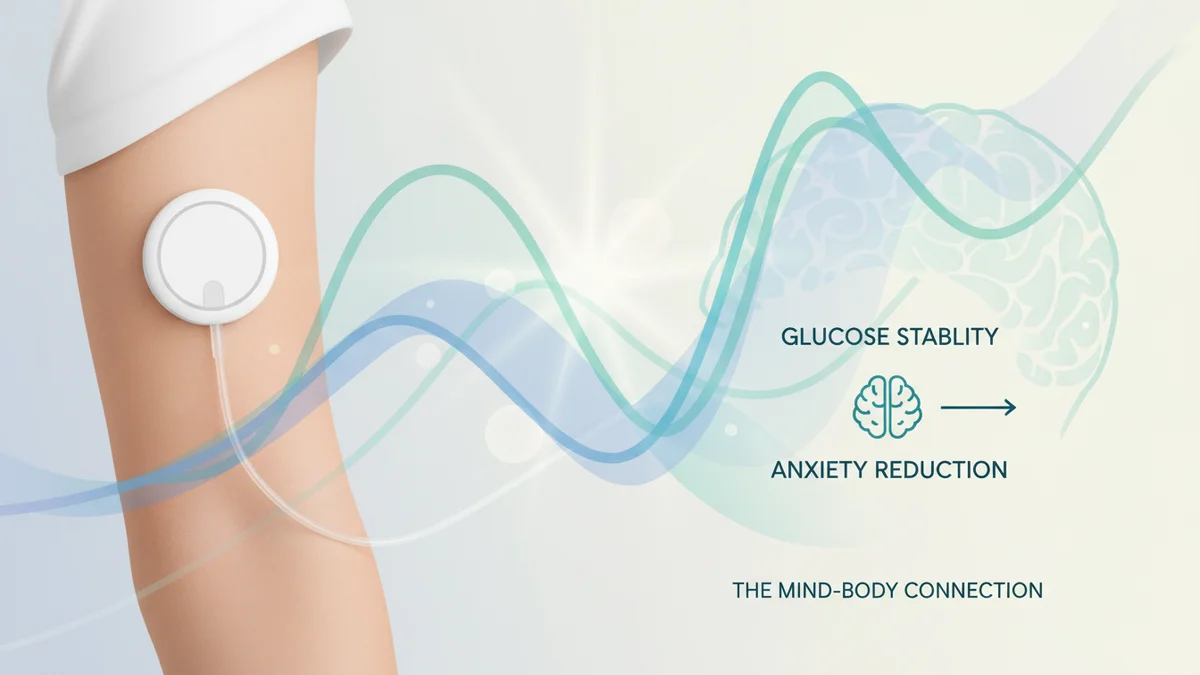
Continuous glucose monitors were first built to help diabetics, but the data now show a plain fact: when glucose swings, people often feel tense, edgy, or foggy. In multiple documented cases, patients who carried a diagnosis of generalized anxiety disorder and who also had frequent low glucose saw their anxiety vanish after they shifted to meals that kept glucose steady. No drug was involved. Recognizing that metabolism and mood influence one another gives a practical option that needs no costly gear or prescription.
What studies with continuous glucose monitors reveal about anxiety
A small sensor worn on the skin records the concentration of glucose in the tissue every few minutes, producing a daylong curve that displays the exact moment a serving of food, a burst of stress, or a walk lifts or lowers the reading. The devices were designed for diabetics, but researchers now use them to demonstrate that jagged traces line up with anxious mood, low mood, irritability, or mental fog.
Repeated trials show that the sharpest predictor of those complaints is the size of the swing, not the height of the peak alone. A rapid climb followed by an abrupt drop carries a stronger link to anxiety than a steady, moderately raised line.
In published case reports, women plus men who met criteria for generalized anxiety disorder and who displayed repeated glucose values under seventy milligrams per deciliter adopted meal plans rich in protein, fiber, and fat while avoiding refined starch and sugar. Within four weeks, their glucose curves flattened and the anxiety checklist scores fell to the normal range. Earlier trials of psychotherapy or medication had not achieved that result.
How a drop in glucose turns into a stress reaction
When the brain senses that glucose is falling quickly—after missed food, after a bowl of high-glycemic cereal, or because insulin action is disordered—it treats the event as a threat to survival. The adrenal glands secrete cortisol and epinephrine, which prompt the liver to release stored glucose so that the blood level rises again.
Those same hormones raise heart rate, tighten small vessels, and speed breathing. The person feels restless, short-tempered, and unable to focus. The experience matches the body state labeled anxiety even though the trigger is metabolic. Because the reaction begins in the bloodstream and not in a conscious thought, the person often blames work, relationships, or “random” factors, or misses the earlier meal as the true cause.
Case study: A patient with generalized anxiety disorder who later had no symptoms
Doctors who study how metabolism affects the mind have published reports on people who carried a diagnosis of generalized anxiety disorder and who also had laboratory-confirmed low blood sugar. Each of those patients removed their anxious feelings solely by changing what they ate. Outcomes differ from person to person, but the reports show a repeated pattern.
First visit
- The person received a diagnosis of generalized anxiety marked by nonstop worry, an inability to rest, and tight muscles.
- Nurses recorded repeated dips in blood sugar under 70 mg/dL.
- Standard talk therapy plus drugs had offered little relief.
- The patient said the anxiety felt “physical” instead of being linked to any clear concern.
Food plan
- Every meal now contained extra protein plus fat from foods like fish, eggs, nuts, avocado, or olive oil.
- Carbohydrates came only from whole-grain oats, brown rice, quinoa, beans, lentils, berries, apples, or fibrous vegetables.
- All white bread, pastries, sweet drinks, and added sugar disappeared.
- Meals were spaced closer together so that no long gap allowed blood sugar to fall.
- Breakfast was eaten every day without exception.
Result
- Within weeks, the person no longer felt anxious.
- The relief stayed only while the food plan continued.
- If the patient returned to former eating habits, the anxiety also returned, proving the link.
Those records show that, in certain anxious people, the driving problem is metabolic, not simply mental or neurological. Fix the blood sugar fault and the stress alarm in the body shuts off.
Everyday food rules that steady glucose
You do not need a continuous glucose meter to gain from the tactics below. Research shows that the following habits cut glucose swings and may calm anxiety when sugar instability is part of the trouble.
Put protein and healthy fat first
- Add eggs, fish, poultry, beans, lentils, nuts, or seeds to every meal and snack.
- Use avocado, olive oil, nuts, or seeds for fat.
- Protein as well as fat slow the entry of glucose into the blood and blunt spikes.
Pick complex carbohydrates
- Select oats, quinoa, or brown rice instead of white rice or white bread.
- Build plates around vegetables with fiber.
- Include beans or lentils.
- Eat whole fruit like berries or apples—skip juice.
Cut refined carbohydrates and added sugar
- Remove white bread, pastries, or candy.
- Do not drink soda, sweet coffee blends, or juice.
- Read labels to spot hidden sweeteners in packaged products.
Eat on schedule and do not miss meals
- Keep meal times the same from day to day.
- Always eat breakfast—it sets the metabolic pace.
- If long gaps cause symptoms, divide food into smaller, more frequent feedings.
- Have a balanced snack if more than four hours pass between meals.
Eat carbohydrates only with protein or fat: an apple needs nut butter, toast needs eggs, rice needs chicken. This slows glucose rise and fall. Blood sugar stays level and the body has no reason to release stress hormones.
How to tell if unstable glucose harms your mind
You do not need costly CGM gear to learn whether sugar swings feed anxiety. Watch for those patterns:
Timing
- Anxiety or irritability arrives 2-3 hours after a high-carb meal
- “Hangry” sensations appear when the stomach is empty
- Morning anxiety fades once breakfast is eaten
- Midafternoon brings low energy plus fog
- Delayed meals trigger shakiness, poor focus, or mood shifts
Body signs that ride with anxiety
- Tremor or shakes
- Sweat
- Fast pulse
- Dizziness
- Sharp hunger plus anxiety
Food reactions
- Mood lifts within 15-30 minutes of eating
- Protein meals calm anxiety
- Sweets or sugary drinks worsen symptoms
Other clues
- Waking anxious at night, a sign of nighttime low glucose
- Strong urges for sugar
- A quick lift from sweets followed by a slump
If any of the above fit, record every meal and every anxious moment for seven days. List food, clock time, and symptom time—links usually show within a few days.
Where diet helps and where it fails
The link between blood sugar and anxiety is proven, but dietary change has borders.
Diet helps when:
- Anxiety brings shakiness, racing heart, or sweat
- Attacks follow a meal or hunger schedule
- Tests show hypoglycemia or prediabetes
- Food eases anxiety
- Sugar cravings dominate
- Standard anxiety care gives little relief
Diet alone will not suffice when:
- Fears, trauma, or life events drive anxiety
- Symptoms persist no matter when you eat
- A doctor has named panic disorder, OCD, or PTSD
- Thought loops like rumination cause distress
- No easing appears after 2-3 weeks of steady eating
Many people respond best when they combine multiple methods. If uneven blood sugar fuels your anxiety, steadying glucose levels will bring relief, but therapy, relaxation skills, or other measures that tackle mind and surroundings remain useful.
6th supplies Audio-Visual Entrainment sessions that sit alongside diet work, shifting the exact nerve circuits involved in anxiety. AVE guides the brain toward calm through timed pulses of light and tone. It acts on a separate pathway from metabolism and therefore pairs well with food-based steps.
Treat diet not as a substitute for professional help but as one part of a full plan. When unstable glucose belongs to your case, fixing it strips away a major physical trigger of anxious sensations.
Frequently asked questions
Q: Do I need a continuous glucose monitor to know if this applies to me?
A: No. A CGM gives rich detail, but simple self-watch also reveals glucose-linked anxiety. Record your signs against mealtimes for seven days—a pattern will appear. A low-cost finger-stick meter lets you test during spells of symptoms.
Q: How long before dietary changes show results?
A: When glucose swings strongly shape anxiety, improvement appears within days to weeks. Published cases of full remission arrived within two to four weeks of steady new eating. Full metabolic shift can require more time.
Q: Will steady blood sugar rid me of anxiety?
A: Only when glucose swings form the single cause, which is a rare situation. Usually this is one of multiple drivers. Fixing it often cuts the strength or number of episodes but may not erase anxiety altogether.
Q: Must I stop eating carbohydrates?
A: You do not need to drop them. Choose complex carbohydrates that contain fiber and eat each portion with protein or healthy fat. This slows absorption and prevents the steep rise and fall that switches on stress hormones.
Q: What if I change what I eat and feel no better?
A: That result tells you that unstable glucose is probably not the main cause of your anxiety. You now know to spend your effort on other proven options: therapy, ways to lower stress, better sleep, or AVE therapy. Each acts on anxiety through a different pathway.
Q: If the new diet helps, should I stop my anxiety drug?
A: Do not stop the drug without talking to the doctor who prescribed it. Tell that doctor that the diet helps. The doctor alone decides whether to change the dose, and any change needs medical oversight.
Sources
- “Continuous glucose monitoring for mental health treatment” - Sequenex, 2024
- “Metabolic Profile and Long-Term Risk of Depression, Anxiety, and Stress-Related Disorders” - JAMA Network Open, 2024