Psychobiotics and omega-3 for anxiety: The new science of gut-brain treatment
New research from 2024-2025 reveals how specific probiotic strains and omega-3 fatty acids directly impact anxiety through the gut-brain axis. Clinical studies show that Lacticaseibacillus casei Shirota, Lactobacillus gasseri, and 2g daily omega-3 can reduce anxiety by supporting GABA, serotonin, and BDNF production in the gut. Discover how nutritional interventions complement traditional therapy for comprehensive anxiety support.
Antidepressants and anti-anxiety medications target neurotransmitters in the brain, but research from 2024-2025 shows the missing piece may actually be in your gut. Your gut microbiome produces 90% of your body’s serotonin and directly influences GABA, dopamine, and brain-derived neurotrophic factor (BDNF) levels. Clinical studies demonstrate that specific probiotic strains—Lacticaseibacillus casei Shirota and Lactobacillus gasseri—combined with optimal omega-3 dosing (2g daily) can reduce anxiety symptoms by supporting neurotransmitter production where it actually happens: in your digestive system. This isn’t about replacing professional care, but about addressing a biological pathway that conventional treatment often overlooks.
Why antidepressants don’t always work: The gut connection
Standard anxiety treatment focuses exclusively on the brain, but meta-analyses show that 30-40% of patients don’t respond adequately to first-line medications. The reason may be that we’re treating only one end of a two-way communication system.
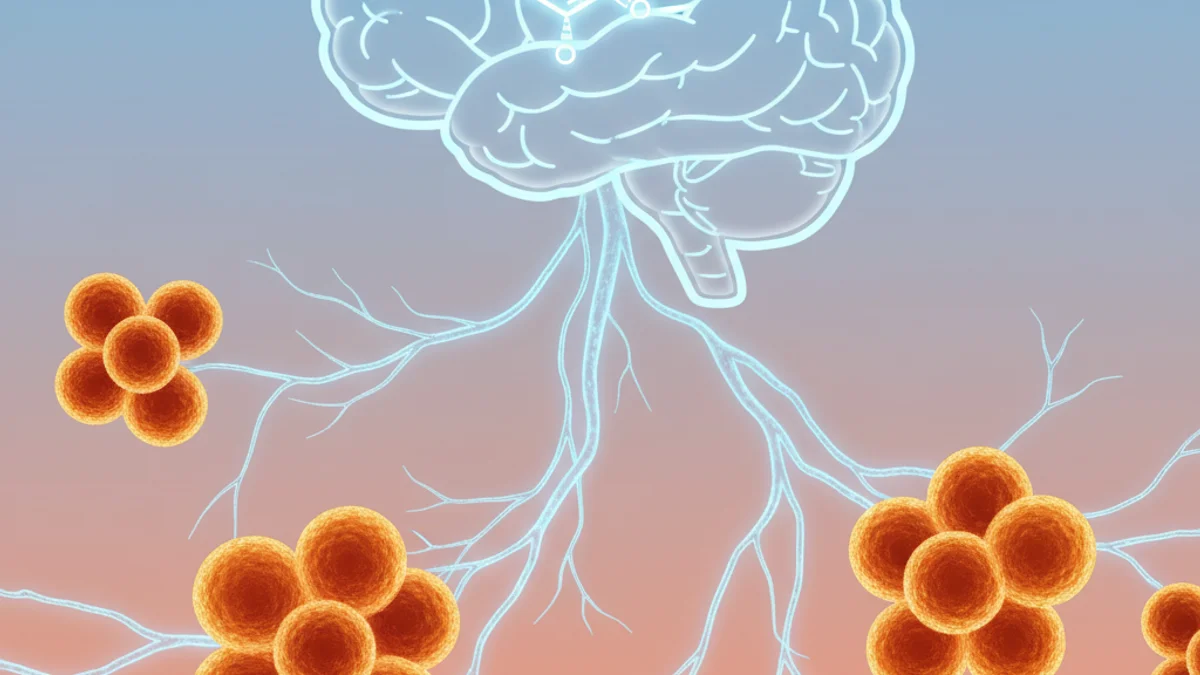
The gut-brain axis is a bidirectional network connecting your digestive system and central nervous system through the vagus nerve, immune signaling, and microbial metabolites. When gut bacteria are imbalanced (dysbiosis), this communication breaks down, leading to reduced neurotransmitter production and increased inflammatory signaling that can worsen anxiety.
Research published in 2024 shows that individuals with anxiety disorders have distinctly different gut microbiome compositions compared to healthy controls, with reduced diversity and lower levels of specific beneficial bacteria that produce neuroactive compounds.
Gut-brain axis explained simply: How gut bacteria produce neurotransmitters
Your gut microbiome isn’t just digesting food—it’s producing the same neurotransmitters your brain uses to regulate mood and anxiety.
Here’s how the process works:
-
Serotonin production: Gut bacteria synthesize tryptophan metabolites that cross into the bloodstream and influence brain serotonin pathways. About 90% of your body’s serotonin is produced in the gut by enterochromaffin cells, guided by signals from gut bacteria.
-
GABA synthesis: Specific bacterial strains (like Lactobacillus and Bifidobacterium) directly produce GABA—your brain’s primary calming neurotransmitter—in the gut, which then communicates with the central nervous system via vagus nerve signaling.
-
BDNF support: Beneficial gut bacteria produce short-chain fatty acids (SCFAs) like butyrate, which increase BDNF production. BDNF is essential for neuroplasticity and has been shown to be reduced in anxiety disorders.
-
Inflammation regulation: A healthy microbiome prevents “leaky gut” (intestinal permeability), which when present allows inflammatory compounds to enter the bloodstream and cross the blood-brain barrier, contributing to anxiety and depression.
When your gut bacteria are balanced, they actively support the neurochemical environment needed for calm, stable mood. When they’re imbalanced, anxiety can worsen even with brain-targeted medications.
Specific bacterial strains with clinical evidence for anxiety
Not all probiotics are created equal. Research from 2024 identifies specific strains with demonstrated anxiety-reducing effects:
Lacticaseibacillus casei Shirota
A 2024 systematic review found that L. casei Shirota supplementation significantly reduced anxiety scores in clinical trials. This strain increases GABA production and modulates stress hormone (cortisol) levels.
Lactobacillus gasseri
Studies show L. gasseri reduces inflammatory markers associated with anxiety and supports serotonin precursor availability. It’s particularly effective when combined with omega-3 fatty acids.
Bifidobacterium longum
Meta-analyses demonstrate that B. longum supplementation improves anxiety symptoms and reduces cortisol response to stress. This strain enhances BDNF production through SCFA metabolism.
Combination formulas
The most effective probiotic interventions use multi-strain formulas containing several of these psychobiotic strains together, creating synergistic effects on neurotransmitter production and gut barrier integrity.
The omega-3 dose that actually works: 2g daily
Omega-3 fatty acids (EPA and DHA) are essential for brain structure and function, but most people don’t get enough from diet alone. A 2024 meta-analysis of 2,189 participants identified the optimal dose for anxiety reduction.
Why 2g/day is the optimal dose
The meta-analysis found that:
- Below 2g/day: Minimal to moderate effects on anxiety symptoms
- 2g/day: Significant, clinically meaningful reduction in anxiety scores
- Above 2g/day: No additional benefit, indicating a dose-response plateau at 2g
EPA vs DHA: Which matters more?
Research suggests that EPA (eicosapentaenoic acid) may be more important than DHA (docosahexaenoic acid) for mood and anxiety support. Most effective formulas provide a 2:1 or 3:1 EPA:DHA ratio.
How omega-3 supports the gut-brain axis
Omega-3 fatty acids reduce gut inflammation, support beneficial bacteria growth, and maintain intestinal barrier integrity. They also cross the blood-brain barrier to directly support neuronal membrane function and neurotransmitter signaling.
Integrated approach: Combining nutritional supplements, AVE therapy, and professional care
The most effective anxiety support combines multiple evidence-based approaches rather than relying on a single intervention.
Nutritional foundation
- Psychobiotics: Multi-strain formula with L. casei Shirota, L. gasseri, and B. longum (10-20 billion CFU daily)
- Omega-3: 2g daily (preferably 2:1 EPA:DHA ratio)
- Dietary support: Prebiotic fiber to feed beneficial bacteria
AVE therapy for direct brain support
While nutritional interventions support the gut-brain axis, AVE therapy directly targets brain wave patterns associated with anxiety. Clinical studies show that AVE therapy using synchronized light and sound can reduce anxiety symptoms by 36-52% within 4-6 weeks.
At 6th.tech, we use real-time EEG monitoring to personalize AVE protocols based on your specific brain wave patterns. This addresses anxiety from the neurological side while nutritional support addresses the gut-brain axis.
Professional guidance
Nutritional interventions and complementary therapies like AVE work best when integrated with professional mental health support. If you’re experiencing persistent anxiety, consider comprehensive care that addresses both biological and psychological factors.
For those in Sofia, our practice office combines AVE therapy with nutritional guidance for a holistic approach to anxiety support.
What to expect when starting psychobiotics and omega-3
Understanding realistic timelines helps set appropriate expectations:
Week 1-2: Gut adjustment
As gut bacteria populations shift, you may experience mild digestive changes. This is normal and typically resolves within 2 weeks. Start with lower probiotic doses and increase gradually if needed.
Week 3-4: Initial improvements
Many people notice subtle improvements in mood stability and stress response around week 3-4. Omega-3 incorporation into cell membranes is occurring, and beneficial bacteria are establishing.
Week 6-8: Significant effects
Clinical trials show measurable anxiety reduction typically emerges around week 6-8 of consistent supplementation. This aligns with the time needed for substantial microbiome shifts and neuroplastic changes.
Long-term maintenance
Continued supplementation maintains benefits. Research suggests that discontinuing psychobiotics leads to gradual return of dysbiosis over 4-8 weeks, so consistent use is important for sustained effects.
Comparison: Nutritional interventions vs standard anxiety medication
| Approach | Psychobiotics + omega-3 | SSRIs/SNRIs | Benzodiazepines |
|---|---|---|---|
| Time to effect | 6-8 weeks | 4-6 weeks | Immediate to 1 hour |
| Mechanism | Gut-brain axis support | Brain serotonin/norepinephrine | Direct GABA enhancement |
| Side effects | Minimal (mild digestive changes) | Common (GI issues, sexual dysfunction, weight changes) | Significant (dependency, sedation, cognitive impairment) |
| Long-term safety | Excellent | Generally safe with monitoring | Problematic (tolerance, dependence) |
| Addresses root cause | Partially (biological pathway) | No (symptom management) | No (symptom management) |
| Best used for | Mild to moderate anxiety, complementary support | Moderate to severe anxiety | Acute anxiety, short-term only |
This isn’t about choosing supplements over medication—it’s about understanding that gut health is a legitimate biological pathway worth addressing alongside conventional treatment.
Frequently asked questions
How does the gut-brain axis actually influence anxiety?
The gut-brain axis functions through three primary pathways: (1) vagus nerve signaling, where gut bacteria send direct neurological signals to the brain, (2) neurotransmitter production, where gut bacteria synthesize serotonin, GABA, and dopamine precursors that influence brain chemistry, and (3) immune modulation, where gut bacteria regulate inflammatory signals that can cross the blood-brain barrier and affect mood. When gut bacteria are imbalanced, all three pathways become disrupted, contributing to anxiety even if brain-targeted medications are used.
Do I need to take psychobiotics forever, or can I stop after anxiety improves?
Research shows that psychobiotic benefits gradually diminish after discontinuation, typically over 4-8 weeks, as gut microbiome composition reverts to baseline. Think of psychobiotics like nutritional support rather than medication—they work while you’re taking them and provide greatest benefit with consistent use. Some people maintain improvements with periodic cycling (3 months on, 1 month off), while others prefer continuous supplementation. Work with a healthcare provider to determine the best maintenance strategy for your situation.
Can I take psychobiotics and omega-3 with my current anxiety medication?
Generally yes, but always consult your prescribing physician first. Psychobiotics and omega-3 supplements are considered safe to combine with most anxiety medications (SSRIs, SNRIs, benzodiazepines). In fact, research shows they may enhance medication effectiveness by addressing complementary biological pathways. However, omega-3 has mild blood-thinning effects, so inform your doctor if you’re taking anticoagulants. Never discontinue prescribed medication without medical guidance.
How long does it take to see results from psychobiotics and omega-3 for anxiety?
Most clinical trials show initial improvements around week 3-4, with significant anxiety reduction emerging at week 6-8 of consistent supplementation. This timeline reflects the biological processes involved: gut bacteria populations need 2-3 weeks to establish, omega-3 incorporation into neuronal membranes takes 4-6 weeks, and neuroplastic changes supported by BDNF increases develop over 6-8 weeks. Individual responses vary based on baseline microbiome composition, diet, stress levels, and anxiety severity.
Which is more important for anxiety: psychobiotics or omega-3?
Research suggests they work through different but complementary mechanisms, making combination more effective than either alone. Omega-3 reduces inflammation and supports neuronal membrane function (direct brain support), while psychobiotics modulate neurotransmitter production and gut barrier integrity (gut-brain axis support). A 2024 meta-analysis found that combined psychobiotic and omega-3 interventions produced larger effect sizes for anxiety reduction than either supplement alone. If choosing one, omega-3 has slightly stronger evidence for anxiety specifically, but optimal results come from addressing both pathways.
What dietary changes support psychobiotic effectiveness?
Psychobiotics work best with prebiotic fiber to feed beneficial bacteria: aim for 25-35g daily fiber from vegetables, fruits, whole grains, and legumes. Foods particularly supportive of psychobiotic strains include fermented vegetables (sauerkraut, kimchi), kefir, garlic, onions, asparagus, and bananas. Avoid excessive sugar, artificial sweeteners, and ultra-processed foods, which can feed harmful bacteria and counteract psychobiotic benefits. Anti-inflammatory foods like leafy greens, berries, and fatty fish (additional omega-3 source) further support gut-brain axis health.
Can the 6th Mind app help with anxiety while taking psychobiotics?
Yes, the 6th Mind app provides AVE therapy sessions that complement nutritional interventions by directly targeting brain wave patterns associated with anxiety. While psychobiotics and omega-3 support the gut-brain axis over weeks, AVE therapy can provide more immediate nervous system regulation through synchronized light (via your phone’s camera flash) and sound. The app sessions are based on clinical protocols from our practice office in Sofia and are optimized for anxiety reduction. Combining both approaches addresses anxiety through multiple biological pathways for comprehensive support.
Sources
- “Psychobiotics for anxiety and depression: mechanisms and clinical applications” - Neuropsychiatric Disease and Treatment, 2024
- “Omega-3 polyunsaturated fatty acids and anxiety symptoms: a dose-response meta-analysis of randomized controlled trials” - Translational Psychiatry, 2024
- “Nutritional interventions for anxiety: systematic review of clinical efficacy” - Nutritional Neuroscience, 2024