Sleep without pills: Why digital CBT-I gets 94% of insomnia patients to remission
A voice-activated CBT-I program achieved 94.3% remission in insomnia patients. Learn what CBT-I actually involves, why it beats sleeping pills long-term, and how digital delivery removes the biggest barrier to access.
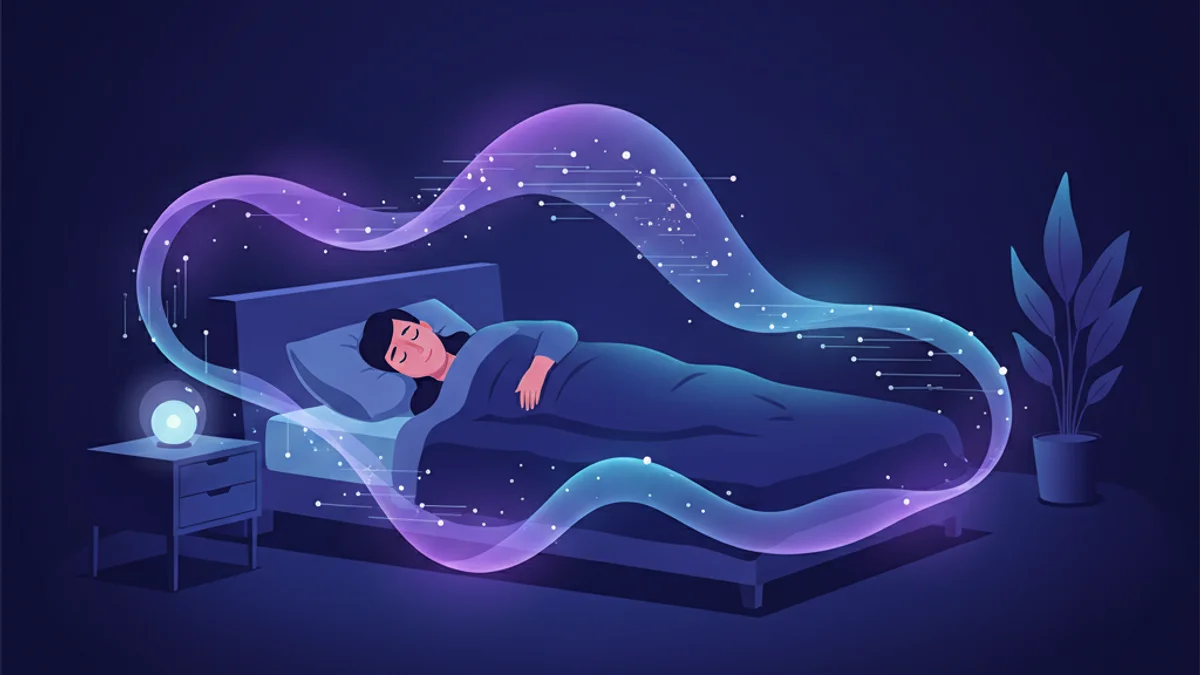
A program that delivers cognitive behavioral therapy through voice commands on smart speakers helps 94.3 percent of users reach subclinical insomnia, which doctors treat as remission. Only 71.4 percent of the control group reach the same level. Those numbers come from a randomized controlled trial published in JAMA Network Open and they overturn the belief that patients must visit a specialist every week for therapy to work.
About three adults in ten say they live with chronic sleep trouble. Many of them either tolerate the problem or swallow medication. The intervention that carries the strongest scientific support for insomnia is not a drug. It is cognitive behavioral therapy for insomnia, abbreviated CBT-I, and the majority of adults have never encountered the name.
What CBT-I is (and is not)
CBT-I is not guided meditation, white noise playback, or a relaxation application. It is a behavioral treatment that lasts four to eight weeks and retrains the connection between body, mind, and sleep.
The main parts are:
Sleep restriction. The name is accurate, and the step feels severe. You allow yourself to stay in bed only for the number of hours you actually sleep. If you sleep five hours but lie in bed for eight, you begin with a five-hour window. This raises sleep pressure, and the window lengthens only after efficiency improves.
Stimulus control. The bed becomes linked solely to sleep - reading, screens, and wakefulness do not belong. If sleep does not arrive within twenty minutes, you leave the bed and return only when drowsiness returns.
Cognitive restructuring. Many insomnia patients hold beliefs that keep the problem alive: “I must get eight hours or I cannot function,” or “One bad night will ruin my week.” CBT-I detects and corrects those patterns.
Sleep hygiene education. This section covers what most people already know - keep the room cool, dark, and on a fixed schedule - but hygiene alone rarely solves chronic insomnia. It serves as one layer inside the full CBT-I plan.
The American Psychological Association lists CBT-I as the first-choice treatment for chronic insomnia, placing it ahead of medication.
Why CBT-I outperforms sleeping pills over time
Sleeping pills like benzodiazepines, Z-drugs, or antihistamines act fast. That speed attracts users, but also sets a trap. The drugs mute the symptom but leave the cause untouched.
Long-term use often leads to tolerance, which forces larger doses for the same effect. Rebound insomnia appears when the drug stops. Daytime drowsiness lingers and the risk of dependence rises. Several studies connect extended sedative-hypnotic use with higher fall rates among older adults and with measurable cognitive decline.
CBT-I needs two to four weeks before sleep patterns start to change, but the improvements often remain. Studies that track participants for twelve months after the last session still record better sleep. The explanation is simple: CBT-I re-teaches habits and thought patterns, so the benefit does not vanish when the meetings stop.
The long-standing access barrier
If CBT-I helps so many, why do so few receive it? The obstacle is not proof. It is availability.
Classic CBT-I depends on a therapist who has extra training in sleep medicine. Such clinicians are rare. In multiple nations, the wait exceeds months. The standard plan demands one office visit every week for four to eight weeks, a timetable that conflicts with night shifts, child care, or long travel to the nearest provider.
The outcome: the therapy that carries the strongest evidence stays out of reach, while hypnotics stay one phone call away.
How digital delivery alters the balance
A trial published in JAMA Network Open examines a voice-based CBT-I skill that runs on Amazon Echo hardware. Users speak with the program from home, at hours they select, and follow a fixed sequence that includes sleep logs and step-by-step behavioral tasks.
Key outcome: 94.3% of the active arm drop below the clinical cutoff on the Insomnia Severity Index, against 71.4% of the control arm. The software keeps the central pillars of CBT-I (sleep restriction, stimulus control, and cognitive reframing) but removes the requirement for a human therapist at each contact.
This result repeats. The American Psychological Association reports that digital CBT-I tools match in-person results across multiple trials. A number of those platforms now carry FDA clearance for prescription deployment.
The trend is consistent: well-sequenced digital courses retain the potent elements of CBT-I and break the access barrier that has restricted the therapy for years.
When to start with an app and when to seek a clinician
Digital CBT-I suits straightforward chronic insomnia - difficulty falling asleep, premature final awakening, or restless rumination in bed. It serves as a first-line option for most adults who face lasting sleep complaints.
Certain scenarios still demand professional assessment:
- Sleep problems that include loud snoring or pauses in breathing, which point toward possible sleep apnea
- Insomnia that stems from a separate medical or psychiatric condition and therefore needs its own treatment plan
- Insomnia that remains severe after a complete digital CBT-I course
- The use of multiple sleep medications that must be reduced under supervision
For people who face insomnia together with anxiety or low mood, the combination of behavioral sleep methods and tools that settle the nervous system directly often brings relief. Audio-visual entrainment (AVE) therapy supplies selected light and sound frequencies that shift brainwave activity from alert beta waves toward the alpha and delta waves linked to relaxation and deep sleep. Clinical AVE protocols for insomnia follow an alpha-to-delta sequence that copies the brain’s normal path into sleep.
The 6th Mind app provides free AVE sessions that fit alongside a CBT-I plan - the sessions offer a physical prompt toward sleep readiness without medication or risk of dependence.
FAQ
What is CBT-I and how does it differ from sleep meditation? CBT-I is a structured behavioral plan that rebuilds sleep habits and corrects unhelpful beliefs about sleep. It sets clear rules about time in bed, stimulus control, and thought change, unlike meditation. Major medical bodies list it as the first-choice treatment for chronic insomnia.
How long does CBT-I take to show results? Many people see clear improvement between two and four weeks. The full plan lasts four to eight weeks. Benefits often remain after the plan ends because daily habits and thought patterns have shifted.
Does digital CBT-I equal in-person therapy? Multiple trials report equal results. One JAMA Network Open study shows that 94.3% of digital CBT-I users reach remission-level scores. Digital programs keep the same core parts as face-to-face therapy and allow flexible timing.
Is it safe to combine CBT-I with the 6th Mind app? Yes. CBT-I deals with behavior and thoughts, while AVE therapy in the app acts on physiology, steering brainwaves toward states that favor sleep. The two methods aim at different parts of insomnia and work together.
Must I stop sleeping pills before I begin CBT-I? Do not change medication without medical advice. Many CBT-I plans start while pills are still used, then taper them as sleep stabilizes. A qualified clinician can oversee the process safely.
Who should not use digital CBT-I? A person who probably has sleep apnea, narcolepsy, or insomnia that stems from an untreated medical problem should visit a sleep specialist before trying digital CBT-I. This program gives its best results for primary insomnia, which means trouble with sleep that no other disorder explains.
Sources
- “Voice-activated cognitive behavioral therapy for insomnia: a randomized clinical trial” - JAMA Network Open, 2024
- “Digital therapeutics and mobile health” - American Psychological Association
- “Audiovisual entrainment neuromodulation review” - PMC, 2025