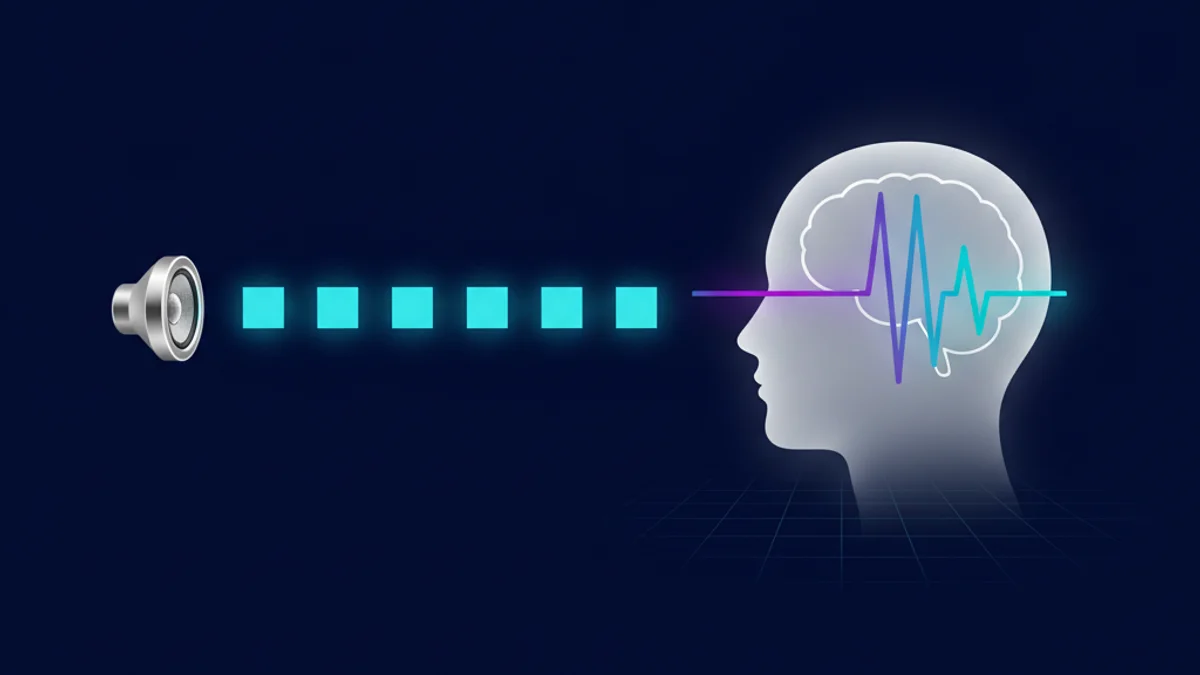
How speed-based cognitive training reverses 10 years of brain aging
The largest brain chemistry study in humans proves that 35 hours of speed-based cognitive training can reverse a decade of acetylcholine decline—the neurotransmitter system that fails in Alzheimer's. No drug has achieved this, yet specific exercises upregulated the brain's own production.

Scientists have now shown, for the first time in people, that the brain’s acetylcholine system - whose levels drop with age and crash in Alzheimer’s - can be pushed back up with the right kind of mental workouts. McGill University researchers use a special PET scan (FEOBV) to watch the chemistry in real time. After 35 hours of speed based exercises, acetylcholine output rises 2.3 %, pushing brain chemistry back to where it had been ten years earlier. No drug has ever done that in a living human. The result confirms what neuroplasticity studies have hinted at - the brain’s chemical supply lines are not locked and the correct training can reopen them.
The breakthrough - restoring brain chemistry without medication
The INHANCE trial at McGill follows 125 older adults with the same FEOBV-PET scan, the only method that can measure acetylcholine activity in a living brain. Each volunteer completes 35 hours of BrainHQ speed drills over twelve weeks - the tasks demand split second decisions on what they saw and heard.
The outcome is clear cut - trained volunteers gain 2.3 % more acetylcholine transporters in the anterior cingulate cortex, the hub that handles attention, memory and self-control. That small sounding gain wipes out roughly a decade of age related loss.
The result matters because acetylcholine is the very system that collapses in Alzheimer’s. Every approved Alzheimer’s drug tries only to slow the slide - none has raised the levels again. The study shows that, given the right push, the brain can still crank up its own acetylcholine supply.
Why speed is crucial - the difference between useful training and casual puzzles
Not every mental pastime works - the trial used speed based drills - tasks that force fast, accurate answers under a ticking clock. That bears little resemblance to a relaxed sudoku session or a self paced memory game.
Speed training succeeds for three plain reasons
Rapid processing is mandatory - When every millisecond counts, the brain recruits wide networks right away. That full scale firing sparks plastic changes that quiet puzzles never reach.
Difficulty tracks performance - The program raised or lowered the challenge on the fly keeping each person near the limit of their skill. That stretch is required for plastic change.
Attention is locked in - A fast countdown demands steady focus and snap choices, the exact jobs that rely on the cholinergic system.
Triggering BDNF signaling - When the brain tackles a hard mental task, it releases more BDNF, a protein that helps brain cells grow and form new connections. This sets the stage for long term change.
Easy pastimes like watching a documentary or doing a relaxed crossword do not push the brain far enough. Real rewiring happens only when the task exceeds present limits.
The 10-year reversal - What it means for your brain
From about age 40 onward, acetylcholine - the chemical that carries messages between certain brain cells - starts to drop and the fall speeds up after 60. This system underpins
- Working memory (holding facts in mind while you use them)
- Attention and focus
- Learning new material
- Processing speed
- Mental flexibility
A rise of only 2.3 % in cholinergic activity brings clear gains in those areas. After training, people remembered more, reacted faster and stayed focused longer and the benefits lasted beyond the end of the study.
The anterior cingulate cortex, the spot that changed the most, handles
- Spotting conflicts (choosing between competing options)
- Catching errors
- Regulating emotion
- Exerting mental control
- Directing attention
Restoring acetylcholine activity in this area does more than raise test scores - it sharpens everyday skills like juggling multiple jobs at once deciding under pressure and coping with complex data.
Connection to AVE therapy - Different path, same principle
The McGill study relies on computer exercises but the core idea - focused stimulation rewires the brain - also guides other proven tools including Audio-Visual Entrainment (AVE) therapy.
AVE therapy delivers light and sound pulses timed to nudge the brain toward chosen rhythms. The method differs from cognitive training but the aim is the same - supply orderly input that forces the brain to rearrange its own patterns.
In our Sofia office we have seen AVE bring parallel changes, especially in
Attention and focus - Many depressed clients notice that concentration lifts before mood fully brightens, probably because the cholinergic attention network has revived.
Processing speed - The heavy, slow feeling typical of depression - where every chore feels harder - often eases when AVE sessions target faster brain rhythms.
Working memory - People regularly report that they can now keep track of multiple facts at once, follow conversations and handle layered tasks.
Those gains match the boosts seen when the cholinergic system is strengthened, though AVE reaches them by rhythm entrainment rather than mental effort.
What this research means for depression and anxiety
The McGill study looks at healthy aging but its results matter just as much for people who live with depression or anxiety. Each of those illnesses brings its own set of thinking problems.
Depression slows the mind - thoughts arrive late, attention drifts, yesterday’s facts slip away and even small choices feel exhausting. Anxiety pushes the mind into over drive - thoughts race but land nowhere, worry locks the attention, stress scrambles short term memory and constant alertness drains the brain’s fuel.
Those thinking problems often stay behind after mood lifts with pills or talk therapy. They are not mere echoes of sadness or fear - they spring from real shifts in brain chemistry plus in the way brain circuits talk to one another.
The McGill work shows that those circuits remain open to change. When the brain receives the right kind of exercise - be it cognitive drills, AVE sessions or other proven tools - it can rebuild its chemical balance.
At 6th.tech we focus first on depression, anxiety and insomnia - we have already logged hundreds of clinical sessions that show clear benefit. We also work with related problems like burnout and technology over use, for which we have dozens of sessions on record. The mental gains we witness in clients rest on many routes, one of which is the same cholinergic boost the McGill team reported.
What to do in everyday life
If your mind feels dull with age or if depression or anxiety has clouded your thinking, proven options exist.
For overall brain upkeep
- Pick a cognitive training program that pushes speed but also grows harder as you improve.
- Move your body - exercise still defends the brain better than most pills.
- Guard sleep - without it, memories crumble and thoughts stall.
When the trouble is tied to depression or anxiety
- Treat the mood problem first, with therapy, medicine or other vetted help.
- AVE therapy can lift mood and sharpen thought at the same time.
- Expect memory as well as focus to heal on their own schedule, often slower than mood.
For a clear picture of where you stand
- If fog, forgetfulness or distraction cripple work or home life, seek a professional check up.
- At our practice office in Sofia, we record each person’s EEG pattern before we tailor an AVE plan.
- Standard memory and attention tests give numbers you can compare over months.
A wider view - the brain can remodel itself at any age
The McGill findings join a stack of studies that overturn the old belief that decline is one-way and final. We now know:
The brain stays adaptable for life - Neural circuits rearrange, new synapses appear and the brain boosts neurotransmitter output at every age.
Intensity counts more than sheer amount - Thirty-five hours of focused demanding training created measurable brain changes. The point is not endless mental busyness - it is the correct level of challenge.
Several routes lead to the same goal - Cognitive drills, physical workouts, meditation, AVE therapy and other methods all tap neuroplasticity through separate channels. The best plan usually blends two or more of those tools.
Measurement proves the method - PET scans besides EEG let us record brain changes in hard numbers replacing opinion with biological proof.
Those findings assure us that cognitive decline - whether linked to aging or to mental health disorders - is not unavoidable. The brain keeps an impressive ability to sharpen its performance when it receives proper support.
The issue is no longer whether cognitive enhancement happens - the data confirm it does. The issue is to choose the path that fits your exact needs, tastes and situation - to decide whether you will devote the concentrated effort neuroplastic change demands.
Sources
- “NIH-Funded Study: Brain Chemistry Breakthrough to Reverse Cognitive Aging” - Posit Science / BrainHQ, 2025
- “FEOBV-PET imaging study of cholinergic neurotransmitter function” - PubMed, 2025
- “Brain-derived neurotrophic factor (BDNF) and cognitive function” - PMC / National Library of Medicine