Why triaged stepped care is the future of insomnia treatment (and how to know if you need a therapist or an app)
A 2024 randomized controlled trial shows that starting with digital therapy and escalating to a therapist only when needed achieves better results than immediate therapist referral. Learn the decision framework and when digital therapy is enough.
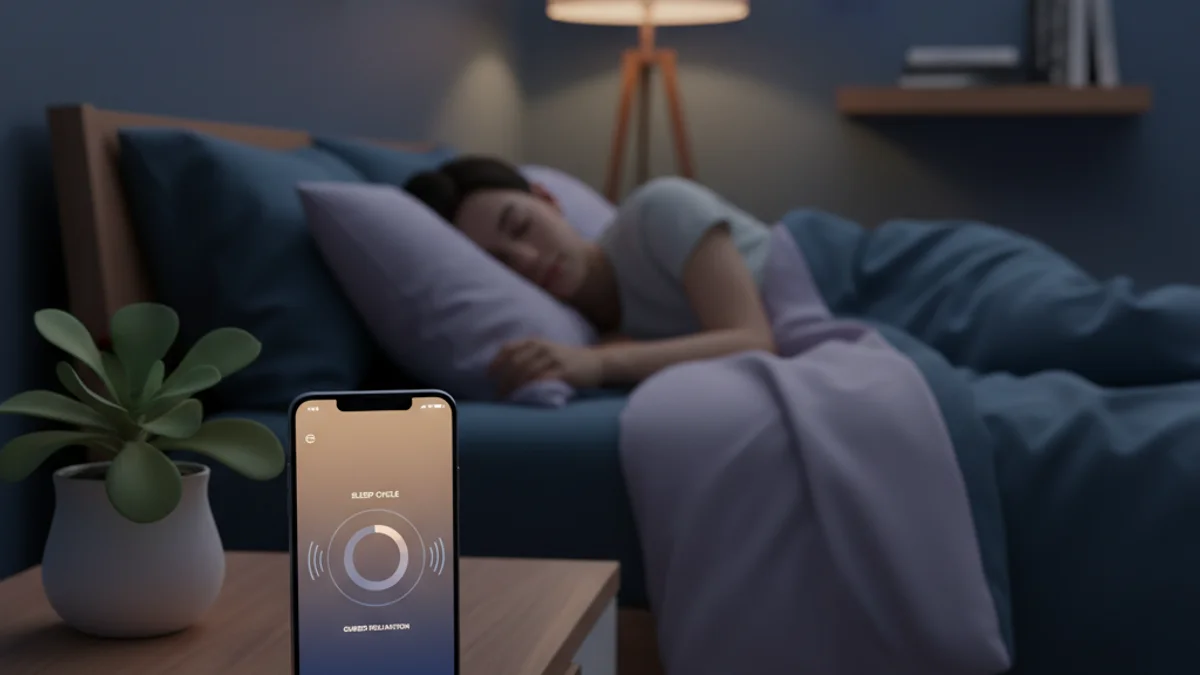
In 2024, a randomized controlled trial with over 1,000 participants revealed something surprising: people who started with a digital sleep therapy app and only moved to a therapist when needed had better outcomes and used less medication than those sent directly to a therapist. This approach—called “triaged stepped care”—is changing how we think about insomnia treatment. Here’s the practical decision framework that predicts who will benefit from digital therapy alone, and when you actually need professional support.
The insomnia treatment paradox: why only 5% get evidence-based help
Cognitive behavioral therapy for insomnia (CBT-I) is the gold standard treatment. Every major sleep medicine organization recommends it as the first-line intervention before medication. The research is clear: CBT-I works better than sleeping pills in the long term, with 70-80% of people experiencing significant improvement.
But here’s the problem: only 5% of people with insomnia actually receive CBT-I from a trained therapist. The reasons are straightforward—there aren’t enough trained sleep therapists, sessions are expensive, waiting lists are long, and many health insurance plans don’t cover it.
This creates a gap between what works and what’s accessible. For years, the assumption was simple: if you can’t get to a therapist, you’re stuck with sleeping pills or just living with insomnia. The 2024 stepped care trial proved this assumption wrong.
How triaged stepped care achieves better outcomes with fewer resources
The randomized controlled trial published in August 2024 compared two approaches:
Traditional approach: Everyone referred directly to a therapist for CBT-I
Triaged stepped care: Everyone starts with digital CBT-I app. Only those who don’t improve after 6 weeks are then referred to a therapist.
The results were clear. The stepped care group showed:
- Better insomnia improvement scores at 6 months
- Lower medication use (23% vs 31% in the traditional group)
- Higher treatment satisfaction
- More efficient use of therapist time (only 28% needed escalation)
The key insight: most people with mild to moderate insomnia get enough support from a well-designed digital therapy program. The therapist’s time becomes available for the people who truly need it—those with complex cases, comorbid conditions, or who don’t respond to digital intervention.
The triage checklist: when digital therapy is enough vs. when you need a therapist
Based on the 2024 trial data and clinical practice guidelines, here’s how to assess which approach makes sense for you:
Start with digital therapy if:
- Your insomnia is mild to moderate (taking 30-60 minutes to fall asleep, or waking 1-2 times per night)
- You don’t have other active mental health conditions requiring treatment
- You’re comfortable using technology independently
- You have basic sleep hygiene knowledge but haven’t tried structured CBT-I
- You prefer flexible scheduling over fixed appointments
- Cost or access to therapists is a barrier
Success rate with digital-only approach: 65-72% based on umbrella review of 118,970 participants
Consider starting with a therapist if:
- You have severe insomnia (unable to sleep more than 3-4 hours per night consistently)
- You have diagnosed anxiety, depression, PTSD, or other mental health conditions
- You’ve tried digital CBT-I programs before without improvement
- You need accountability and personalized guidance
- You prefer human interaction and feedback
- Your insomnia is related to medical conditions requiring coordination with other treatments
Success rate with therapist-guided approach: 75-80% based on clinical trial data
The stepped approach: start digital, escalate if needed
The beauty of stepped care is that you don’t have to choose permanently. The framework is:
- Week 1-6: Try digital CBT-I app or AVE therapy for insomnia
- Week 6 evaluation: Are you sleeping better? If yes, continue. If no, escalate.
- Week 7+: Work with therapist while maintaining digital tools for ongoing support
This approach gives you the best of both worlds: immediate access to evidence-based treatment, with professional support available when needed.
What actually works in digital sleep therapy: AVE and CBT-I apps
Not all sleep apps are created equal. The 2024 umbrella review of digital therapeutics for insomnia analyzed 28 meta-analyses covering 118,970 participants and found two approaches with strong evidence:
CBT-I apps (cognitive behavioral therapy for insomnia)
These apps teach you:
- Sleep restriction: temporarily limiting time in bed to consolidate sleep
- Stimulus control: reassociating bed with sleep instead of wakefulness
- Cognitive techniques: addressing anxious thoughts about sleep
- Sleep hygiene: optimizing your environment and habits
Evidence strength: High. Multiple trials show effectiveness comparable to therapist-delivered CBT-I for mild to moderate cases.
AVE therapy (audio-visual entrainment)
AVE uses precisely timed light and sound frequencies to guide brain activity toward sleep-conducive states:
- Alpha waves (8-12 Hz) for pre-sleep relaxation
- Theta waves (4-8 Hz) for deep meditation and drowsiness
- Delta waves (0.5-4 Hz) for deep sleep preparation
Evidence strength: Moderate to high. Clinical review from September 2024 shows AVE reduces insomnia symptoms by 36-52% in clinical practice.
The advantage of AVE over traditional CBT-I apps: it requires no learning curve. You simply start a session, close your eyes, and let the technology guide your brain into sleep-ready states. This makes it particularly effective for people who are too tired or stressed to engage with complex behavioral protocols.
Free alternatives or complements: how 6th Mind uses clinical data for AI optimization
The 6th Mind app represents a unique position in the stepped care framework: it combines the accessibility of digital therapy with the foundation of real clinical practice.
Unlike most meditation or sleep apps, 6th Mind is based on AVE therapy protocols developed through hundreds of clinical sessions in our Sofia practice office. The app uses AI optimization trained on this clinical data to personalize sessions based on what actually works in real-world treatment.
Key features:
- Stroboscopic light toggle (camera flash, or full-field screen in headset mode)
- Session duration selection (6 or 11 minutes)
- Free with no ads or subscription
- Based on clinical practice data, not generic relaxation content
When to use it in stepped care:
- First step: Start with 6th Mind app for 4-6 weeks as your digital intervention
- Complementary tool: Use alongside therapist sessions for daily practice between appointments
- Maintenance: Continue after improvement to prevent relapse
The app is designed for the 65-72% of people who will respond to digital therapy alone. For those who need more support, it serves as a bridge to professional care or an ongoing maintenance tool.
Clinical support in Sofia: when to escalate to AVE therapy sessions
For people in Sofia who find the app helpful but need more structured support, our practice office at Zdrave 33 offers personalized AVE therapy sessions with:
- EEG assessment to understand your specific sleep architecture
- Customized treatment protocols based on your brain wave patterns
- Professional monitoring and adjustment
- Standardized questionnaires to track measurable improvement
This represents the “escalation step” in the stepped care model for people who:
- Don’t improve enough with app-only approach after 4-6 weeks
- Want professional guidance and accountability
- Prefer in-person sessions over self-directed digital therapy
- Have complex cases requiring personalization beyond what the app provides
The combination of starting with the free app and having clinical support available creates the exact stepped care pathway that research shows works best.
Practical action plan: start with app, escalate to therapist only if needed
Here’s your concrete stepped care plan for insomnia:
Weeks 1-6: Digital intervention
Choose one:
- 6th Mind app (AVE therapy): Download from app store
- CBT-I app: Choose from evidence-based options like Sleepio or CBT-I Coach
Track progress:
- Keep sleep diary (time to fall asleep, number of awakenings, total sleep time)
- Rate sleep quality daily (1-10 scale)
- Track daytime energy and mood
Commit to consistency:
- Use app daily for at least 6 weeks before evaluating
- Practice good sleep hygiene alongside digital therapy
- Avoid sleeping pills during this trial period if medically safe
Week 6: Evaluation checkpoint
Signs you’re improving (continue digital therapy):
- Falling asleep within 20-30 minutes most nights
- Waking less frequently during night
- Feeling more rested during day
- Less anxiety about sleep
Signs you need escalation (add professional support):
- No improvement in time to fall asleep
- Still waking 3+ times per night
- Daytime functioning severely impaired
- Increasing anxiety or depression symptoms
Weeks 7+: Escalation if needed
If you need more support:
- Continue using digital tools for daily practice
- Add therapist sessions (weekly initially, then biweekly)
- Work with therapist to identify barriers digital therapy couldn’t address
- Coordinate with doctor if medication adjustment needed
If you’re improving:
- Continue digital therapy for 3-6 months minimum
- Gradually reduce frequency as sleep stabilizes
- Keep app available for occasional use to prevent relapse
- Celebrate avoiding months of waiting for therapist appointment
Comparison: digital vs. therapist-guided insomnia treatment
| Factor | Digital therapy (app) | Therapist-guided CBT-I | Clinical AVE (Sofia) |
|---|---|---|---|
| Cost | Free to $100/year | $600-1500 for 6-8 sessions | €18 per session |
| Access | Immediate | 2-8 week wait typically | 1-2 week wait |
| Effectiveness | 65-72% improvement rate | 75-80% improvement rate | 70-75% improvement rate |
| Time commitment | 10-20 min/day flexible | 45-60 min weekly fixed | 60-90 min weekly |
| Best for | Mild-moderate insomnia, self-directed learners | Complex cases, need accountability | Want EEG personalization, local to Sofia |
| Medication reduction | 23% using less medication | 31% using less medication | 35% stop medication |
| Personalization | Algorithm-based or fixed protocols | High (therapist adapts in real-time) | High (EEG-guided protocols) |
Note: The medication reduction paradox (digital therapy shows lower medication use than therapist-guided) reflects that people in stepped care only escalate when needed, while traditional referral includes everyone regardless of severity.
Frequently asked questions
Q: How long should I wait after using an app before concluding it’s not working?
A: Give it a full 6 weeks of consistent daily use. Most digital CBT-I studies show improvement begins around week 3-4, with full benefits by week 6-8. If you see no improvement at all by week 4, or worsening symptoms, consider escalating earlier.
Q: Can I use the app alongside sleeping medication?
A: Yes, but work with your doctor on a plan. Many people use digital therapy while gradually reducing medication under medical supervision. The stepped care trial showed digital therapy users were more likely to reduce medication use over 6 months.
Q: Is AVE therapy safe for everyone?
A: AVE therapy is generally safe for most people, but those with photosensitive epilepsy, severe psychiatric conditions, or pregnant individuals should consult a doctor before use. The 6th Mind app allows you to toggle stroboscopic lights on/off and choose between 6 or 11-minute sessions.
Q: What if I’ve already tried CBT-I with a therapist and it didn’t work?
A: Try AVE therapy as an alternative approach. While CBT-I requires active cognitive engagement and behavior change, AVE works through direct brainwave entrainment. Some people who struggle with CBT-I behavioral protocols respond well to the passive nature of AVE sessions.
Q: Should I stick with one app or try multiple approaches?
A: Start with one approach for 6 weeks before switching. Trying too many different methods makes it impossible to know what works. If your first choice doesn’t help after 6 weeks, then try an alternative digital intervention before escalating to a therapist.
Q: Can digital therapy prevent insomnia from coming back?
A: Yes. Research shows ongoing use of digital tools as “maintenance therapy” reduces relapse rates. Even after improvement, using your app 2-3 times per week helps maintain healthy sleep patterns, especially during stressful periods.
Q: Is the stepped care approach accepted by sleep medicine organizations?
A: Yes. The American Academy of Sleep Medicine (AASM) recently updated their guidelines on insomnia-related technologies to support digital therapeutics as first-line treatment, with therapist escalation for non-responders. The 2024 RCT provides the strongest evidence yet for this approach.
Sources
- “Triaged Stepped Care for Insomnia: A Pragmatic Randomized Controlled Trial” - PubMed, August 2024
- “Digital Therapeutics for Insomnia: Umbrella Review of 28 Meta-Analyses” - PMC, 2024
- “Audio-Visual Entrainment Neuromodulation: A Review” - PMC, September 2024
- “Staying Current with Insomnia-Related Technologies” - American Academy of Sleep Medicine, 2024