What is audio visual entrainment? Science, benefits, and how it works
Audio visual entrainment (AVE) uses rhythmic light and sound to guide brainwave activity. Learn how this form of light and sound therapy works, what clinical evidence supports it, and what to expect from a session.
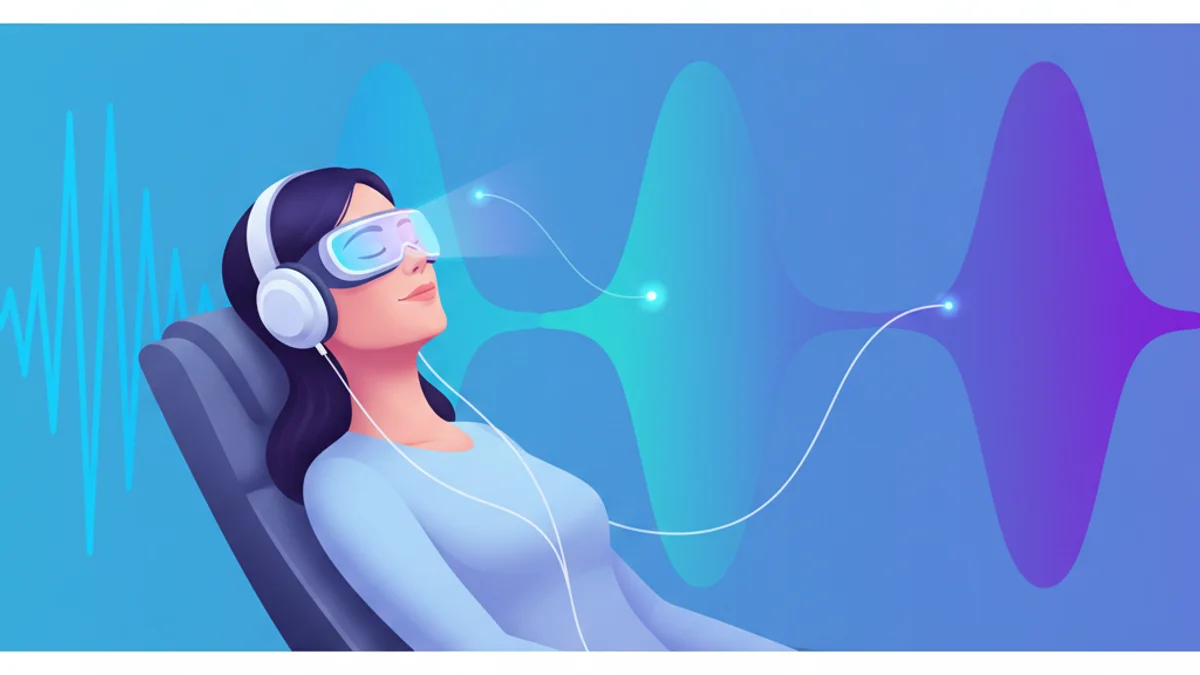
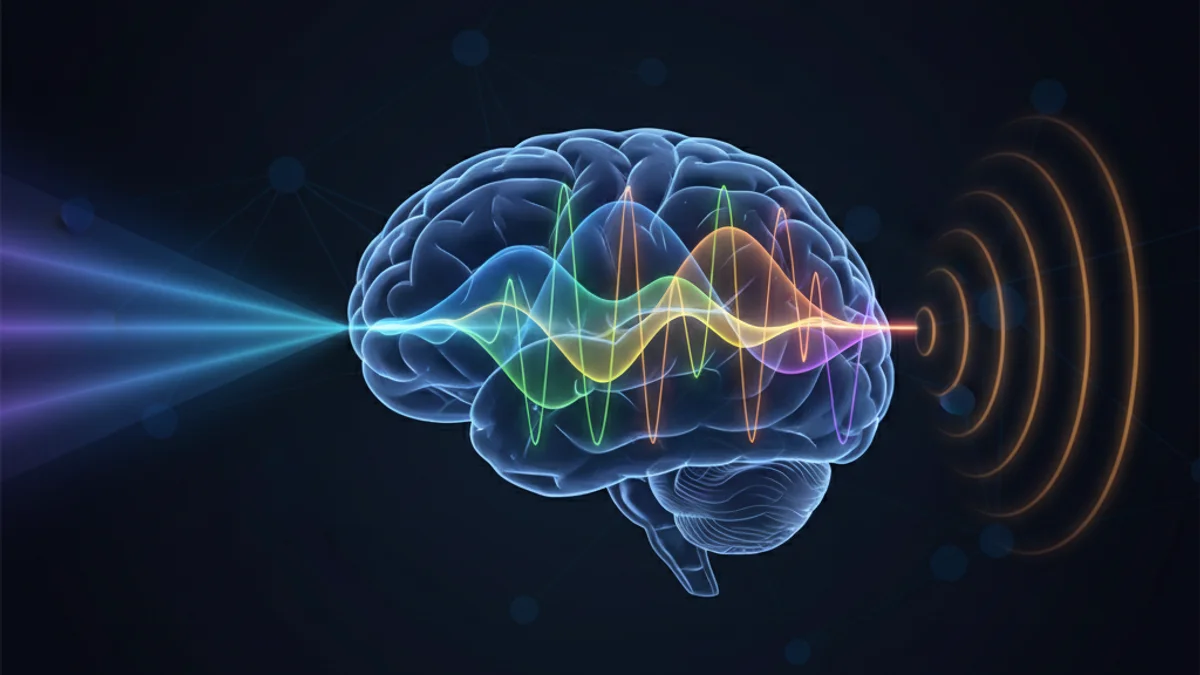
Audio visual entrainment (AVE) is a method in which light flashes and sound beats arrive at the same steady pace, and that pace nudges the brain toward an intended electrical speed. A person sits with eyes shut, wears goggles that emit soft pulses of light through closed lids, and hears steady beats through headphones. The brain then copies the external tempo: scientists label this copying process entrainment. The chosen pace decides if the person feels calmer, more alert, or ready for sleep.
Over five decades of studies exist and clinics already apply the method, but the public remains largely unaware. The sections below clarify what AVE involves, how it functions, and which claims stand on solid data.
A short history of light-and-sound stimulation
During the 1960s, artist Brion Gysin constructed the Dreamachine, a rotating cylinder with slots that cast flickering light on closed eyes. Observers described vivid imagery as well as deep calm. Investigators of the same era recorded the frequency following response: the brain’s habit of echoing the tempo of outside stimuli.
Those early demonstrations led to medical devices. Firms like Mind Alive with its DAVID line, besides Roxiva, now sell machines that time light and sound with millisecond accuracy. The central rule has not changed: present a chosen tempo through eyes or ears, and brain rhythms lock onto it.
How AVE is distinct from binaural beats, neurofeedback, and meditation
People often list those methods together, but each acts through a separate route.
Binaural beats send one tone to the left ear and a slightly different tone to the right. The nervous system detects a third beat equal to the gap, for example a 10 Hz “beat.” Because only hearing is involved, the effect stays mild. AVE adds timed light, and photic stimulation triggers a larger cortical reaction. A 2025 paper in Brain Sciences reports that combining both channels yields stronger entrainment than sound alone.
Neurofeedback records ongoing brainwaves and rewards the user whenever the desired frequency appears, but the user must learn the skill. AVE needs no learned control, because the outside stimulus resets the rhythm directly.
Meditation relies on internal training of attention, and progress appears after regular practice. AVE offers an external driver that shifts patterns within minutes, though users may still combine it with meditative training.
No single approach claims absolute superiority. Each method fits specific needs, and users often blend several of them.
What published clinical data show
In 2025, the journal Brain Sciences released the first peer-reviewed article devoted solely to audiovisual entrainment. The paper surveys five decades of trials across many diagnoses.
Depression. Repeated experiments show that 14 Hz pulses (low beta rhythm) lift mood. The likely reason: the stimulus reduces alpha asymmetry, a state in which the left frontal lobe emits weaker alpha waves than the right. Neurologists already link this imbalance to depression.
Anxiety. Ten-hertz alpha trains the cortex to step down from high-beta alertness into relaxed modes. After multiple AVE appointments, participants repeatedly report lower scores on anxiety questionnaires.
Insomnia. Clinicians apply alpha-to-delta ramping: the device starts at relaxed alpha, slides through theta, and ends at delta, copying the nightly descent into deep sleep. Trials record faster sleep onset and better rest, without the dependence that sleeping pills create. For patients who want non-drug approaches to better sleep, AVE offers a practical route.
ADHD and mental sharpness. Early work, including a 2025 virtual-reality AVE project for ADHD, hints that chosen frequencies sharpen attention and processing speed, though the data pool remains small.
Trial NCT06686563 is now testing audiovisual stimulation for cognition, mood, and sleep in people who live with chronic pain. The launch of that larger study signals growing scientific interest.
Adverse events and restrictions
Across the reviewed literature, AVE causes few problems. Many volunteers call a session deeply relaxing.
Photosensitive epilepsy stands out as the chief warning. Because the eyes receive flickering light, any person with a seizure history or known photosensitivity must secure medical clearance first. Sporadic accounts mention brief headache or light-headedness, mainly in newcomers.
AVE does not substitute for licensed mental health treatment. It serves as an add-on, used beside therapy, prescribed drugs, or other strategies.
Practical ways to experience AVE
Two routes exist: office-based sessions guided by a clinician and smartphone-driven sessions that the user runs at home.
Clinical sessions take place in a controlled room with medical-grade hardware like Roxiva lamps. A trained clinician records your brain activity with an EEG before and after every visit, then adapts the protocol to suit your unique response. At our practice office in Sofia, for instance, EEG-guided personalization pairs the correct frequencies with each patient’s brain rhythms over a standard series of ten to fifteen visits.
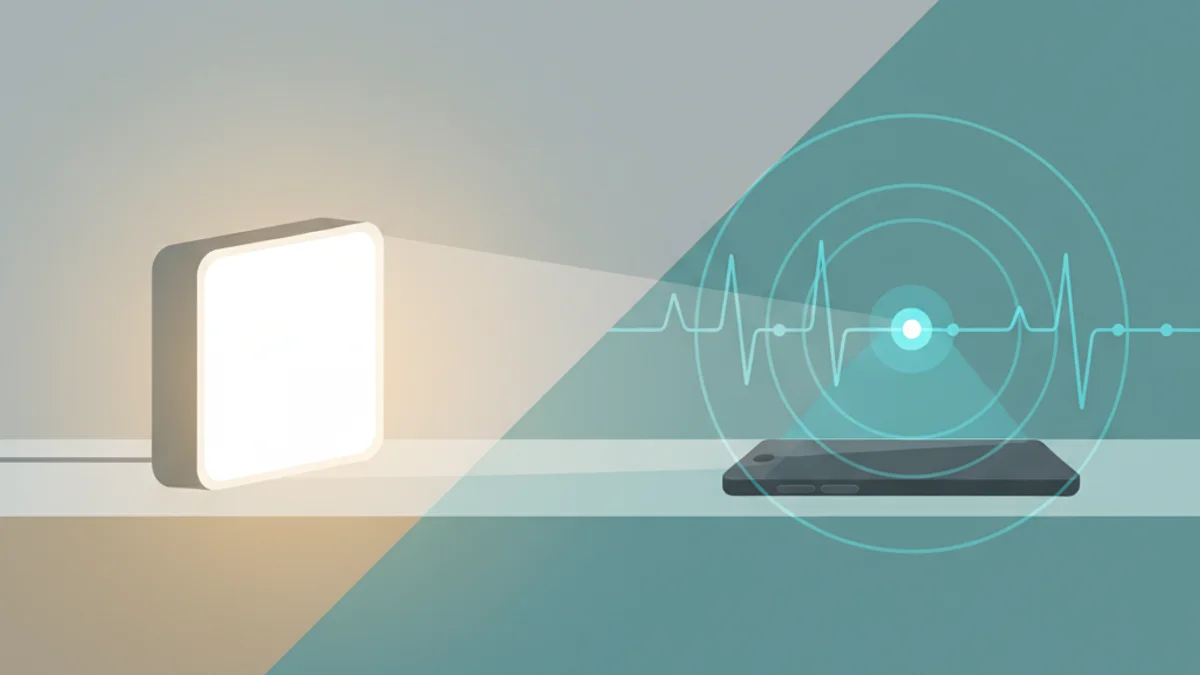
App-based sessions let you use AVE outside a clinic. The 6th Mind app sends stroboscopic light through the phone’s camera flash and adds isochronic audio tones. The software costs nothing, demands no subscription, and follows step-by-step plans built on data gathered from hundreds of clinical visits.
Both routes rely on the same core principle: rhythmic light and sound steer the brain toward chosen frequency bands. The contrast appears in the amount of personal calibration and real-time observation.
People who face depression, anxiety, insomnia, or burnout and wish to test what AVE provides will find, according to current studies, that the method merits a trial, provided they keep practical hopes about the outcome of any single strategy.
Sources
- “Audio Visual Entrainment overview” - NeuroEM Therapeutics
- “Audio Visual Entrainment (AVE): Mechanism of action and clinical applications” - Mind Alive
- “WAVE study on audiovisual stimulation for cognitive/mental health” - ClinicalTrials.gov (NCT06686563)