Best free mental health apps in 2026: no subscription required
An honest comparison of free mental health apps in 2026 - what Headspace, Calm, Insight Timer, Lumenate, and 6th Mind actually cost, what you get for free, and how to choose.
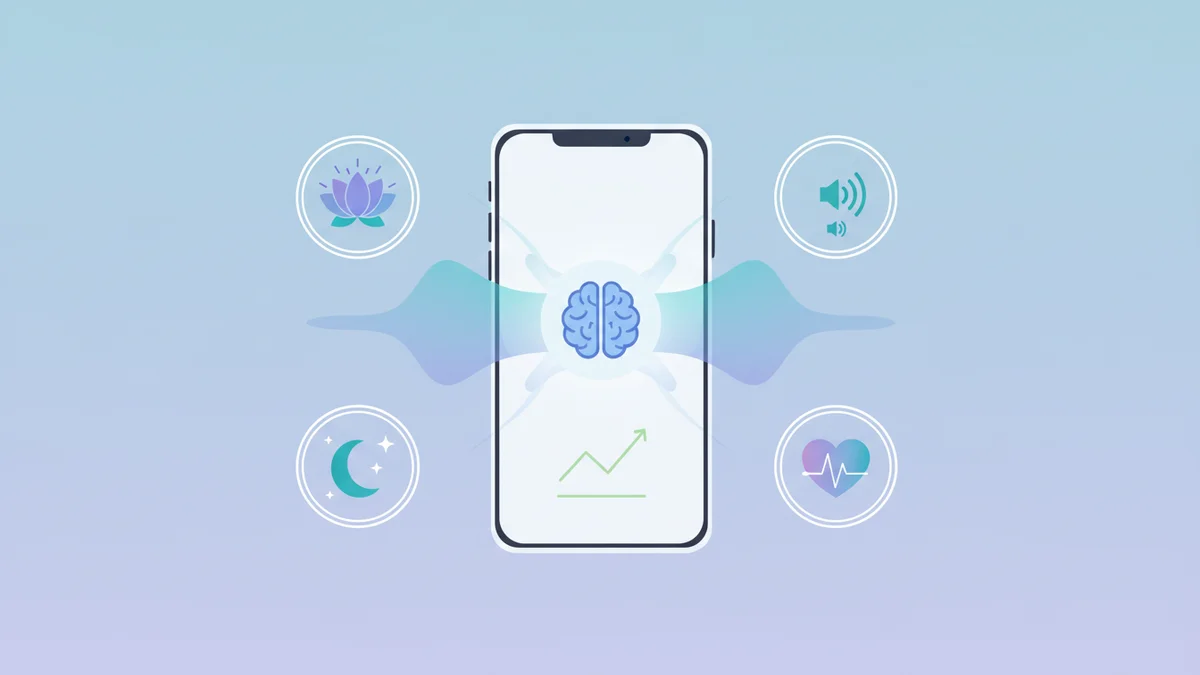
It is common for the search for a digital tool for mental health to result in a lack of satisfaction. Many programs are available at no initial cost but they restrict the most helpful functions behind a recurring payment system. According to a 2026 report by Grow Therapy, “free” tools for digital health are now a standard part of medical care. The requirement for payment prevents many individuals from the consistent use of those tools.
Why most “free” mental health apps are not actually free
The model where a product is free but requires payment for extra features is the dominant system. In a digital store, an app is listed as free. When a user opens it, the initial sessions function without a fee. By the time a few minutes pass, a payment screen appears. For instance meditations that are guided become inaccessible. In another example, stories for sleep require a subscription. There is also a requirement to pay a premium fee for the tracking of progress.
This creates a situation that is difficult to understand for individuals who lack the $70 to $100 per year for those services. The important difference is between a program with a free level that is useful and an app that uses “free” as a way to market a trial period.
App-by-app breakdown: what each one costs and includes
Headspace is available for approximately $70 per year after a period of 7 days for a trial. In the free version, there are a few basic meditations - but the app removes access to longer courses.
Calm is priced at roughly $70 per year - if a user does not have a subscription, the app provides a small selection of meditations. As an example it offers one story for sleep. Much of the content in the library is unavailable.
Insight Timer is different because its free level is large - it includes over 200 000 meditations that are guided. The version for a premium fee is $60 per year - this version is for access without an internet connection.
Ten Percent Happier is approximately $100 per year - the content that is free is very small. For instance it contains only a few sessions for beginners - this app is for people who want to pay for courses on meditation that are structured.
Lumenate is a program that uses the flash on a phone camera to make light effects that are stroboscopic - those are for the creation of experiences that are similar to psychedelics. Because pricing changes by region, a subscription is necessary for full access. Lumenate is for the exploration of mental states that are altered. It is not designed for managing clinical conditions like depression or anxiety. For a description of a Lumenate alternative, there is a specific page.
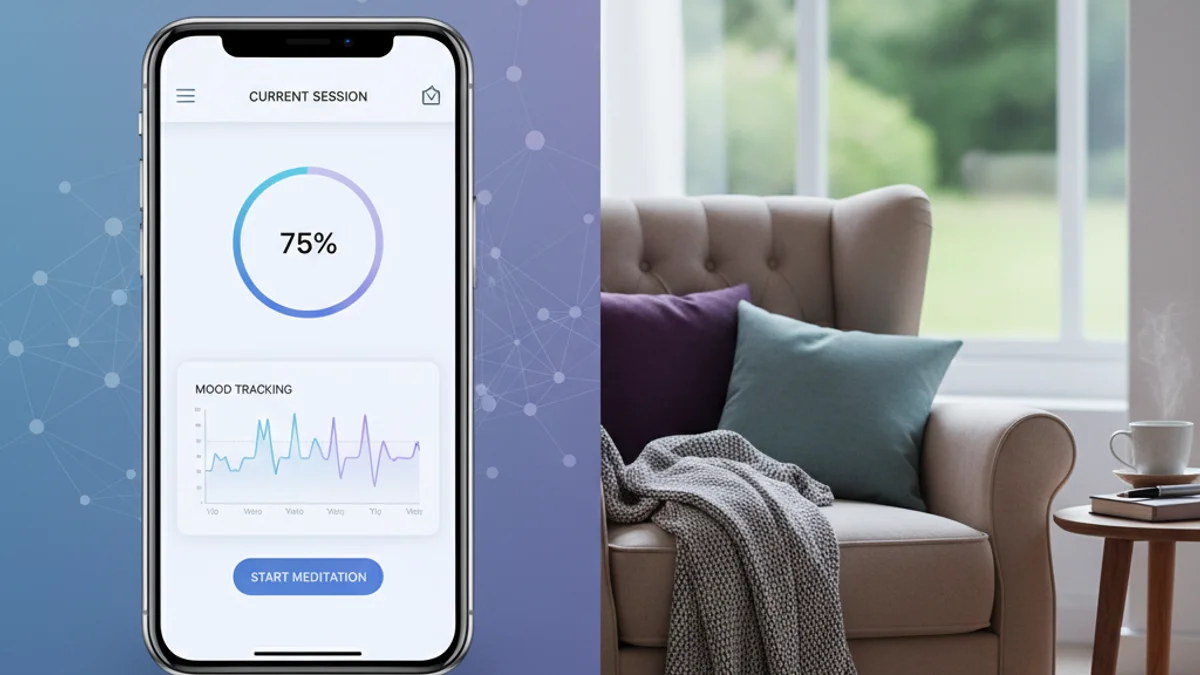
6th Mind is free to use, with no subscription needed. There are no advertisements in the app. Nothing inside the app is locked behind a paywall. By using the phone camera flash and audio tones that are isochronic, the app provides audio visual entrainment (AVE). Sessions are 6 or 11 minutes long. The protocols are from data from over 800 clinical sessions in an office located in Sofia, Bulgaria. It targets depression, anxiety, insomnia, and burnout.
Comparison table
| Feature | Headspace | Calm | Insight Timer | Ten Percent Happier | Lumenate | 6th Mind |
|---|---|---|---|---|---|---|
| Annual cost | ~$70 | ~$70 | Free / $60 premium | ~$100 | Subscription | Free |
| Free tier usefulness | Limited | Limited | Substantial | Minimal | Limited | Full access |
| Clinical basis | Wellness | Wellness | Wellness | Wellness | Recreational | Clinically informed |
| Method | Guided meditation | Guided meditation | Meditation + community | Meditation courses | Stroboscopic light | AVE (light + sound) |
| Offline access | Paid only | Paid only | Paid only | Paid only | Varies | Yes |
| Target use | Stress, focus | Stress, sleep | Meditation practice | Mindfulness education | Altered states | Depression, anxiety, insomnia, burnout |
Clinical apps vs recreational apps: what separates them
Apps for wellness like Headspace are for the reduction of general stress. They are for people who are healthy and want to build a habit for mindfulness.
Apps for recreation like Lumenate are for the production of experiences that are interesting and involve altered states - this is for personal exploration.
Apps that are clinically informed use methods that are based on research that is published. 6th Mind is in this category. Its AVE protocols are from techniques that have decades of study - those are based on outcomes from hundreds of sessions that were supervised. While it is not a replacement for a doctor, its sessions are for specific conditions.
How to choose based on what you actually need
Building a meditation habit? Insight Timer is a good choice because it has a large library that is free. For courses that are structured, Headspace is a clear option.
Managing a specific condition? If you are dealing with depression, anxiety, insomnia, or burnout, an app with a clinical foundation is more suitable. 6th Mind is for this purpose and is available without cost.
Curious about altered states? Lumenate is for exploration - this is a different goal than a tool for mental health.
On a tight budget? Insight Timer and 6th Mind represent the most viable choices because those platforms do not require a paid membership.
Frequently asked questions
Is Lumenate free? In its current form, Lumenate provides a small portion of content at no cost but demands a monthly payment for complete access. If you require a tool for light stimulation that costs nothing, 6th Mind is a Lumenate alternative worth trying.
What is the best free alternative to Headspace? To find meditation content, you can use Insight Timer because it maintains a large collection of unpaid resources. For a method that uses light therapy, 6th Mind is free of charge.
Can an app replace therapy? By design those programs serve as additions to traditional care. If your mental state is unstable, you must speak with a medical doctor.
What makes a mental health app “clinically informed”? It is an app that uses data from academic studies - this software prioritizes results that doctors observe in patients.
Are free mental health apps effective? When you use a tool regularly, it is more likely to produce a result. To determine quality, you should check if the creators use scientific evidence. The lack of a price tag is simply a result of how the company earns money.
Sources
- “Mental Health Trends 2026” - Grow Therapy
- “10 Trends Transforming Behavioral Health in 2026” - Beckers Behavioral Health