Your light and sound session knows nothing about you
Nearly every brainwave app calls itself personalized, and nearly all of them play a predetermined track. Here is the difference between open-loop and closed-loop stimulation, the 2026 products trying to cross the line, and where our own sessions sit.
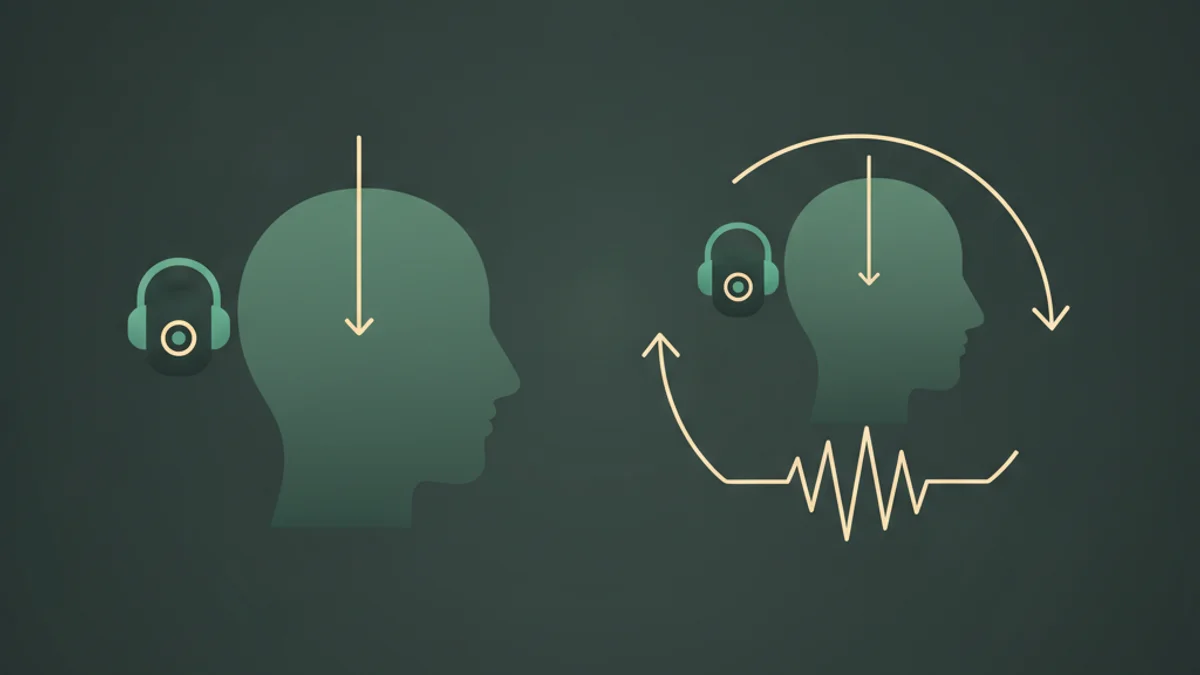
Most mobile applications for brainwave modulation use the label of personalization, but almost none of them alter their output while a session is playing. Open-loop stimulation plays a sequence of light and sound that a developer programmed before the user pressed play. Closed-loop stimulation reads a live physiological signal and adjusts what it plays in response. In 2026, consumer-grade closed-loop stimulation exists in one narrow place: audio timed to detected sleep stages. The other products that companies market as personalized are questionnaires, preset menus or recommendation algorithms. Our own sessions are open-loop, and this post describes what that design does and does not cost you.
What open-loop and closed-loop actually mean
An open-loop session is what happens when a user selects a theta program and the application plays a predetermined sequence. The audio opens at a higher, alert frequency, steps down in ramps of roughly thirty seconds and then holds the target state. It runs the same way whether the user starts out calm or agitated.
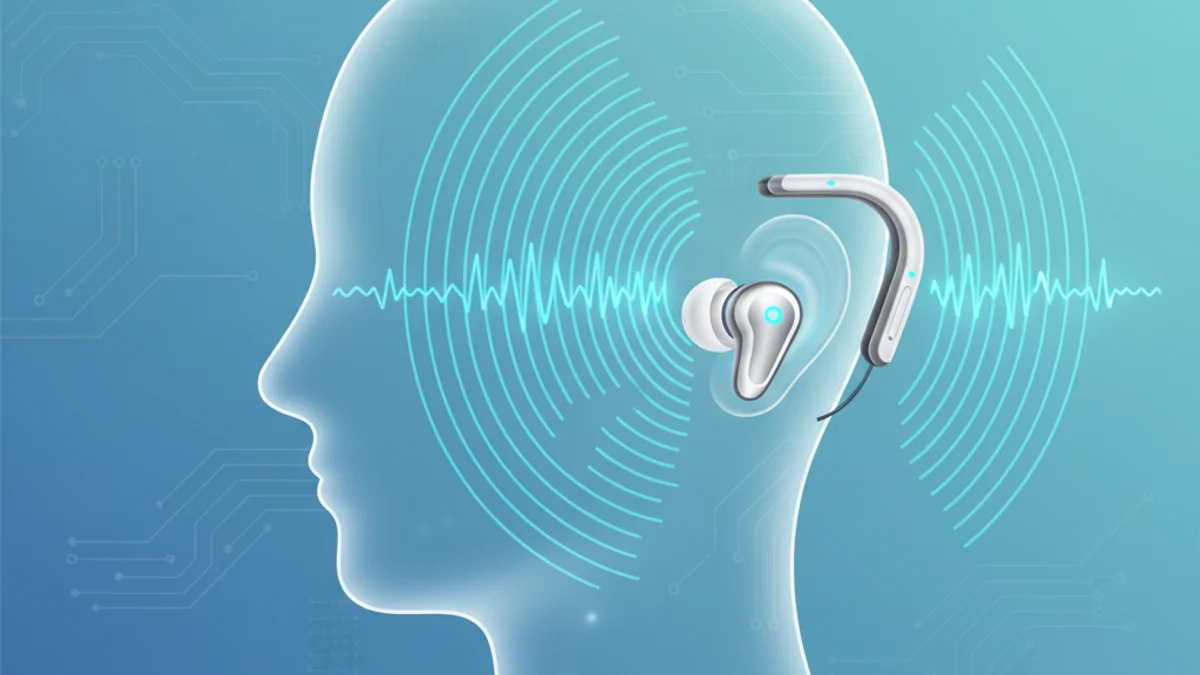
A closed-loop session requires a device that records electroencephalography (EEG) data without interruption. The device identifies the current sleep stage, delivers a short sound during the rising phase of a slow oscillation and stops playback when the stage shifts. The stimulation relies entirely on a measurement that the hardware captured seconds earlier.
Neither design is inherently superior. The important factor is whether a measurement sits inside the active loop, and in most products that use the word “personalized”, it does not.
What closed-loop looks like in consumer hardware
In February 2026, NextSense introduced Smartbuds, wireless earbuds containing six EEG sensors. Those sensors detect when a user transitions between sleep stages and play audio during deep sleep to increase slow-wave activity. The hardware costs $399.99, with an additional $14.99 monthly fee for disposable components. The manufacturer reports increased slow-wave activity across a 106-night test period, though that figure appears in a promotional statement rather than a peer-reviewed journal. The design is still a functional loop: the device measures, decides, stimulates and measures again.
The NeuralChek Go from BrainTap, announced in July 2026, follows the more common pattern: hardware that measures heart rate variability over a few minutes. That is an assessment rather than a loop, because the measurement happens around the session and nothing in the audio changes because of it. The announcement claims that “decades of research and 12 clinical studies have validated” the technology of the company, and it includes no citations for any of them.
Where our own sessions sit
The 6th Mind app uses an open-loop design: it records no EEG data and measures nothing about the body of a user. Personalization comes from an intake questionnaire that builds a fifteen-day program, one session a day, and from the routine you set around it: a 40 Hz session in the morning, a theta-to-delta sleep session in the evening, at reminder times you choose.
The measurement in our work happens at our practice office in Sofia. We record two minutes of EEG data using a Muse band before every session and two minutes after. We have done this across more than 1000 audio-visual entrainment sessions with 170 people. Approximately 80% of programmes that reached ten or more sessions (n≈70) improved on the EEG baseline index, and those are completers, because not every programme runs that long. The loop closes at the level of the protocol: the sequences, ramps and carrier re-tuning in the app come from comparing those before-and-after EEG readings. It is a feedback loop between sessions, which is real, rather than one that reacts within the second, which it is not.
The system also allows a user to control personalization directly. The Session creator tool builds a session to your own specification: the band and target frequency, a length of 6 to 60 minutes, and either your own music or a built-in noise. The Session library plays all 36 default sessions free in a web browser, sound only and with no account needed, and the app adds the synchronized light.
The light itself comes from the phone: the camera flash aimed at closed eyes, or the screen in headset mode, where the display splits into two halves, one per eye, inside a 3D-printable holder. Version 2 also added sessions you can run with your eyes open, with adjustable brightness. None of that measures you either. It is how the stimulation is delivered, not a loop.
The difficulties of closing the loop
Closed-loop acoustic stimulation during sleep has been studied in research labs for more than ten years. Doing it with a handful of consumer sensors is the new part. The classification of sleep stages using only one to four electrodes is imprecise, which allows a system to respond to the incorrect stage. Physical movements like clenching a jaw or turning over appear as brain activity to a small sensor array. An audio cue that occurs near the edge of REM sleep can fragment sleep rather than deepen it. A loop that interprets its input incorrectly is worse than a fixed sequence, not better.
What personalization buys, and when a fixed protocol is enough
The majority of published evidence in this field rests on fixed protocols. In February 2026, a systematic review in Acta Neuropsychiatrica reports effect sizes of d=0.34 to 0.59 for binaural beats regarding anxiety, stress physiology, sleep and cognition. The researchers analyze ten trials involving approximately 970 young adults and find that clinical samples show more substantial changes than healthy samples. In June 2026, a meta-analysis in Explore reports a standardized mean difference of -0.53 on pain across four trials with 173 participants, though the authors grade the evidence as low certainty. Every session behind those numbers followed a predetermined sequence.
Fixed sequences are effective when the goal is to shift the current mental state. A preset audio track to relax before sleep, or a 40 Hz session before work that requires concentration, is usually sufficient, and neither needs second-by-second adjustment. The value of personalization increases when the technology adjusts a factor that a user cannot control manually, like the moment a sound lands inside a sleep cycle. It is worth much less when the technology simply changes the labels on a menu of options.
Four questions to ask before paying extra for “personalized”
- What does the device measure, and when? It might take measurements before, during or after the session, or it might collect nothing at all.
- Does the measurement alter the audio stimulation or only the final report? A graph indicates that the device is performing an assessment, while a closed loop changes the specific sounds that the user hears.
- What determines the parameters of the next session? Your own physiological data, or a list that you selected from.
- If “clinically proven” appears, which studies and what control group did the researchers use? There is no regulatory definition for this phrase, and a vendor who cannot name specific trials is telling you something.
If the honest answer to those questions is “it plays a fixed sequence”, you do not need to avoid the product, but there is no reason to pay a premium for a word. To understand the broader context of hardware that senses brain activity, read our analysis of consumer EEG wearables.
Sources
- “NextSense Launches Smartbuds, the World’s First Truly Wireless EEG Earbuds” - BusinessWire, 2026
- “Introducing NeuralChek Go” - BrainTap, 2026
- “Music and binaural beat interventions for young adults: a systematic review of effects on anxiety, sleep, and cognition” - Acta Neuropsychiatrica, 2026
- “Efficacy of theta binaural beat therapy on pain, cognition and anxiety in adults: a systematic review and meta-analysis of RCTs” - Explore, 2026
- “The effect of binaural beats music-based interventions on the autonomic nervous system, kinesiophobia of reinjury and fitness biomarkers in professional athletes: study protocol for a double-blind RCT” - Healthcare, 2026
- “NuCalm review” - MedConsumerWatch, 2026