Psilocybin just passed phase 3 for depression: what this means for drug-free alternatives
Compass Pathways' COMP360 psilocybin showed significant depression reduction in its first Phase 3 trial. Here's what happened, why access will take years, and what drug-free options are available right now.
In February 2026, Compass Pathways announced that its synthetic psilocybin compound COMP360 reached the primary goal in a Phase 3 clinical trial for depression that does not respond to standard treatments. Participants who receive one 25 mg dose have fewer symptoms of sadness and hopelessness than those who receive a placebo. To measure this change, researchers use the Montgomery-Asberg Depression Rating Scale (MADRS). This is the first time a therapy based on psilocybin has completed the final testing stage required before a company seeks permission from government agencies to sell it.
The data is significant, but a practical challenge exists: for most people, this therapy is not available for multiple years.
What the COMP360 trial data shows
The Phase 3 trial includes adults with depression that remains after they try at least two different antidepressant medications. During the study, participants take one dose of COMP360 while trained therapists monitor them in a clinic. In the weeks after the dose, the group receiving 25 mg shows a change in their scale scores that is unlikely to happen by chance. Compass Pathways is now planning to talk with the FDA about rules for its use. If the agency gives permission, COMP360 would be the first psilocybin medicine that a doctor can prescribe.
How psilocybin works in the brain
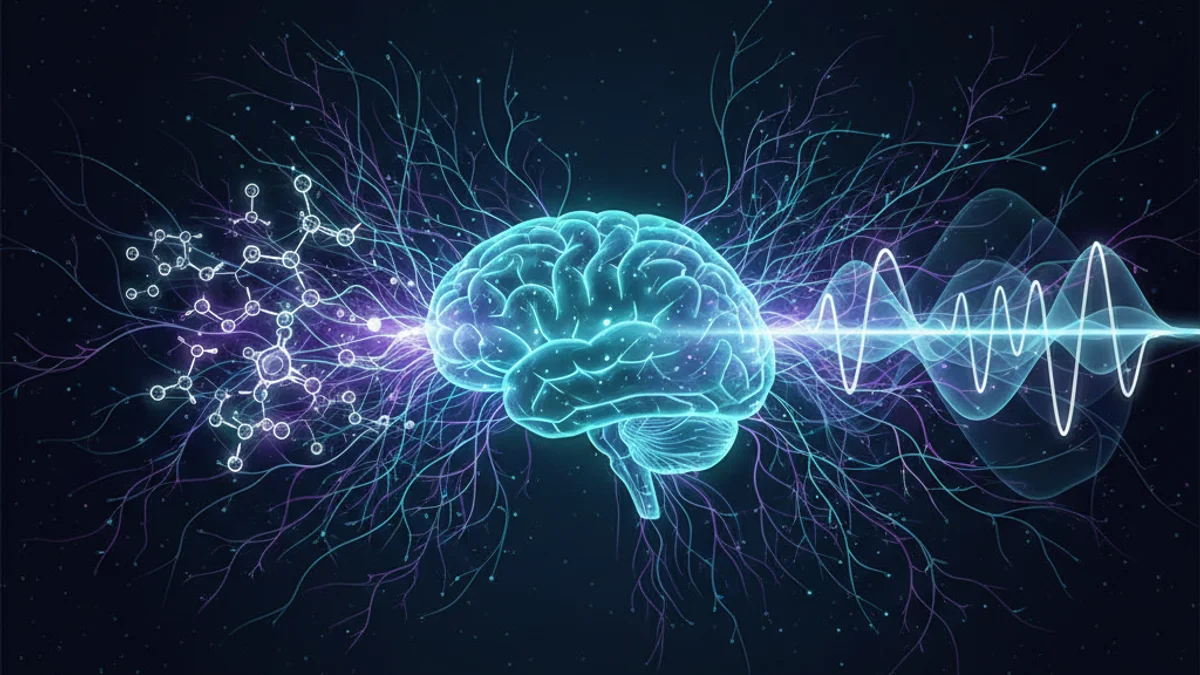
By entering the body, psilocybin turns into psilocin and attaches to serotonin 2A receptors in the outer layer of the brain. The default mode network, the part of the brain that is active when a person thinks about themselves, becomes less rigid under the influence of the drug. In this state, parts of the brain that usually remain separate talk to each other. Researchers describe this period as a time when the brain is more capable of change.
In a clinic, therapists help patients during this experience. With the drug and the therapy together, people experience benefits that last for a long time. The drug is less effective if a person takes it without support from a professional.
The accessibility problem
As positive results emerge, multiple obstacles prevent individuals from getting the treatment.
Regulatory timeline. The timeline for government review is long: it often takes 12 to 18 months for the FDA to review an application. Eastern European countries like Bulgaria have no legal rules for using psilocybin.
Cost and infrastructure. Each session takes place in a specialized clinic with two therapists for one patient for up to 8 hours. Because of these requirements, prices range from $3,000 to $10,000 for one session. It is not certain if insurance companies will cover this.
Therapist shortage. There are not enough people with the right training to provide this therapy.
For those who have depression now, it is not helpful to wait 3 to 5 years for this medicine.
Mechanistic overlaps with other approaches
The research on psilocybin is important because it shows how the brain changes its function. Key processes include the disruption of the default mode network and the ability of the brain to form new connections. Those changes are not unique to drugs.
By using stroboscopic light, for example, a person can experience a different state of mind. Research at the University of Sussex shows that flickering light at a specific rhythm creates an experience that feels like a small dose of a psychedelic drug, without any substance entering the body. This happens because the light stimulates the part of the brain that processes vision, which cascades into broader changes in neural activity.
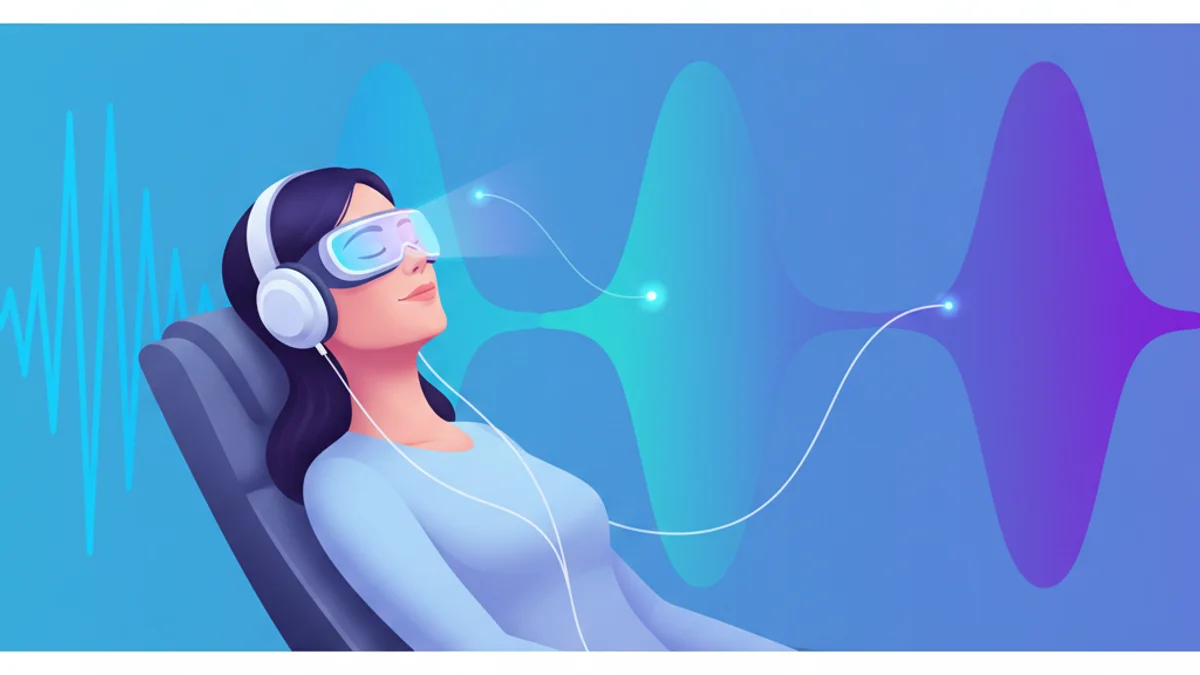
Audio visual entrainment (AVE) follows a similar logic. With pulses of light and sound, the brain moves toward specific electrical frequencies: alpha for relaxation, theta for deep calm, gamma for alertness. At the 6th practice office in Sofia, over 800 clinical sessions have shown measurable shifts in EEG patterns associated with depression, anxiety, and insomnia.
Light stimulation is not the same as psilocybin. But the main idea, that the brain becomes more flexible when it receives stimulation from the outside, is worth understanding.
What you can do right now
If you have depression and cannot wait for new drugs, several evidence-based options are available today.
Cognitive behavioral therapy (CBT) remains the most studied psychological treatment for depression. Studies consistently show it has a moderate to large impact on symptoms.
AVE therapy uses light and sound to change brain patterns associated with depression. Sessions are short (6 to 11 minutes with an app, or 30 to 45 minutes in a clinical setting), non-invasive, and require no medication. The 6th Mind app offers a free, clinically informed option that uses the phone’s camera flash for stroboscopic light stimulation combined with isochronic tones.
Exercise improves symptoms of mild to moderate depression as much as antidepressants do. People benefit when they move at a moderate pace for 30 minutes three times every week.
Mindfulness-based approaches lower how often depression returns for people who experience it frequently. Mindfulness-based cognitive therapy (MBCT) has the most support from research.
None of these replace care from a specialist if symptoms are severe. They function as tools that work with current treatment plans, or serve as a starting point for people exploring their options.
The bigger picture
Mental health care is changing so that people have more options than just medication or talk therapy. The success of psilocybin in Phase 3 trials is one piece of a broader shift toward diverse, evidence-informed approaches: alongside digital biomarkers, wearable-based monitoring, and AI-optimized treatment protocols, as noted in a 2026 analysis by WRN Clinical.
You do not have to wait for any single breakthrough to start addressing depression. Effective, accessible tools exist now, and the science is moving forward on multiple fronts.
Sources
- “10 Mental Health Advances to Know in 2026” - AMFM Treatment, 2026
- “Looking Ahead: The Future of Mental Health and Addiction Research in 2026” - WRN Clinical, 2026