Brainwave audio while you work: a 2026 replication says it can cost you
A July 2026 preprint reports that home-use binaural beats do not improve, and may slightly impair, cognitive performance during demanding work. What that means, why the supportive studies measure something else, and the practical rule that follows.
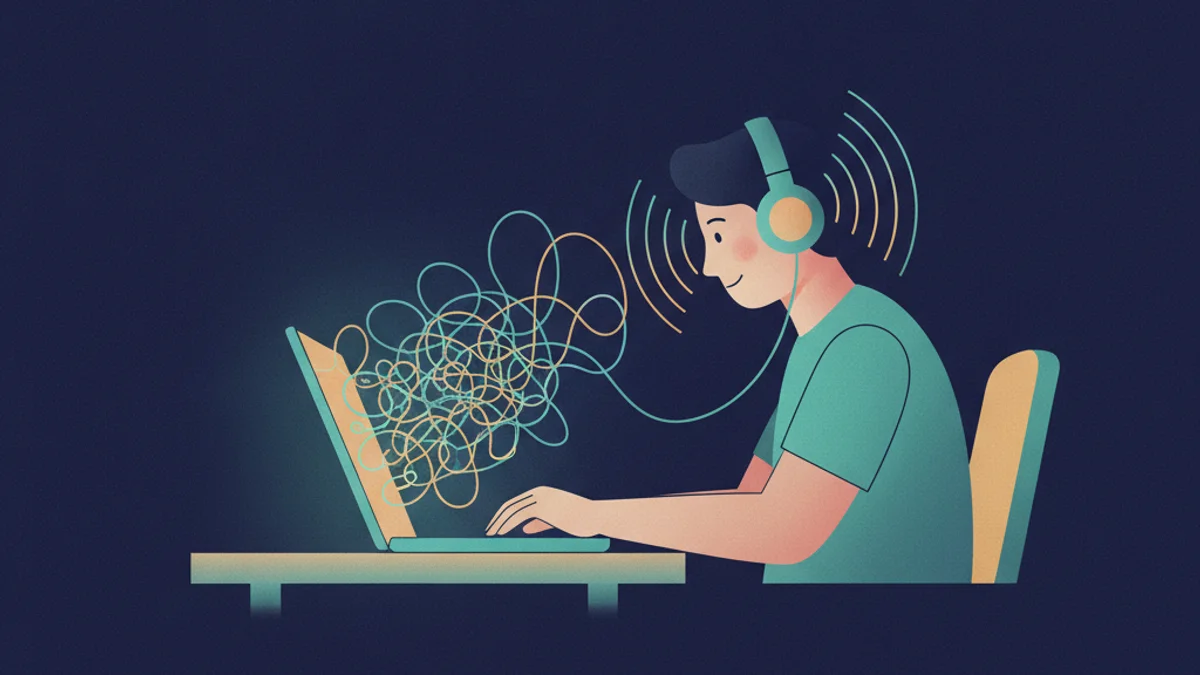
The current evidence does not support listening to binaural beats during difficult mental work. The most recent experiment indicates that those sounds do not help, and may cost you a little accuracy. In a study released on July 17, 2026, on PsyArXiv, the authors report that people using home-use binaural beats score slightly lower on a reasoning test than they do in silence, and that the differences between individual listeners stay large and unexplained. It may look strange to publish this on a website about brainwave audio, but the study points at a specific distinction. Using sound to change your state before you start a task is not the same as playing that sound while you work.
What the 2026 replication reports
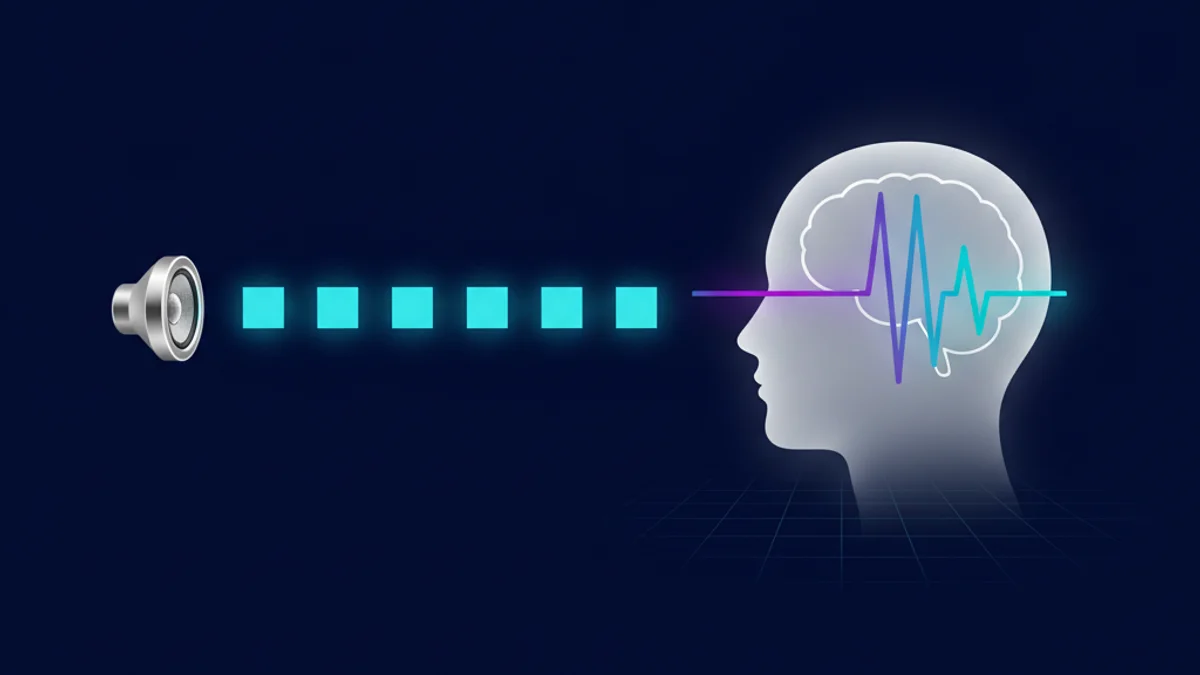
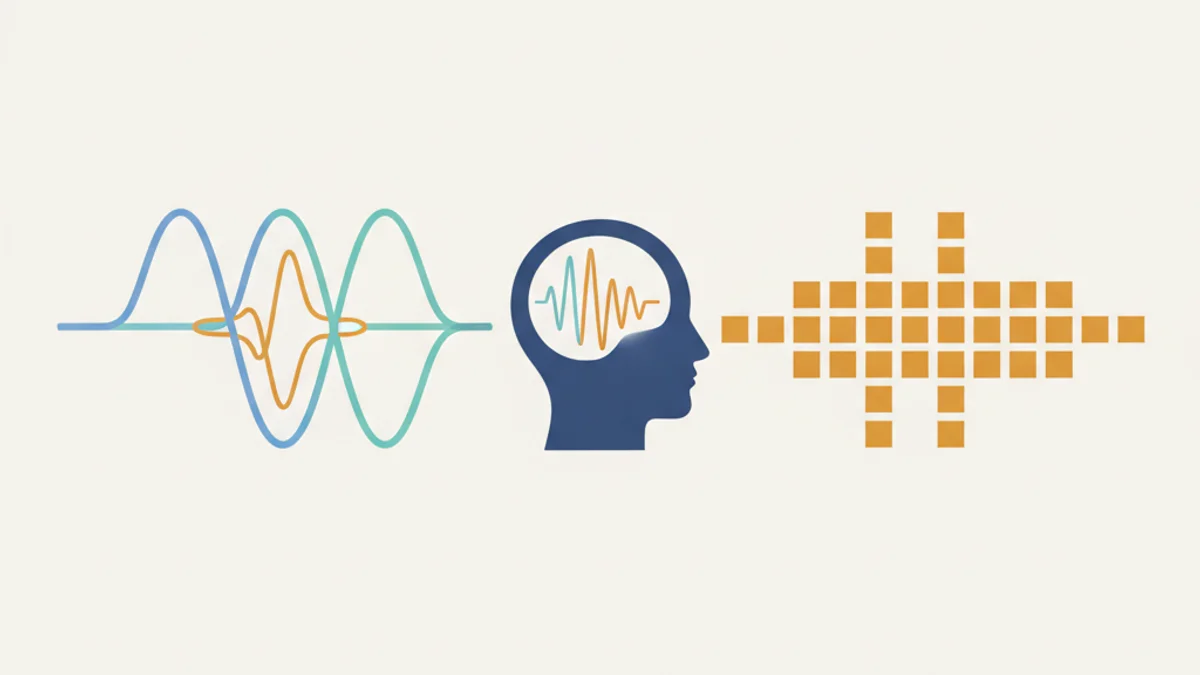
The preprint “Binaural-beat hype fails scientific scrutiny again” repeats and extends an earlier experiment on binaural beats during demanding work, this time in a sample of nearly 2,000 adults. The design is randomised and single blind. Each participant first solves fluid-intelligence problems (reasoning and problem-solving) in silence, then solves more of them under one of three conditions: 15 Hz binaural beats, 20 Hz binaural beats, or a pure-tone control. Both binaural-beat groups drop slightly from their own baseline. The control group does not.
One limitation matters here: as a preprint, the paper is not yet peer reviewed, so independent experts have not checked the methods or the analysis. It is a strong signal rather than a settled conclusion. What makes it hard to ignore is that it is a replication: a second study that lands on the same answer as the first.
Why the home-use condition is the point
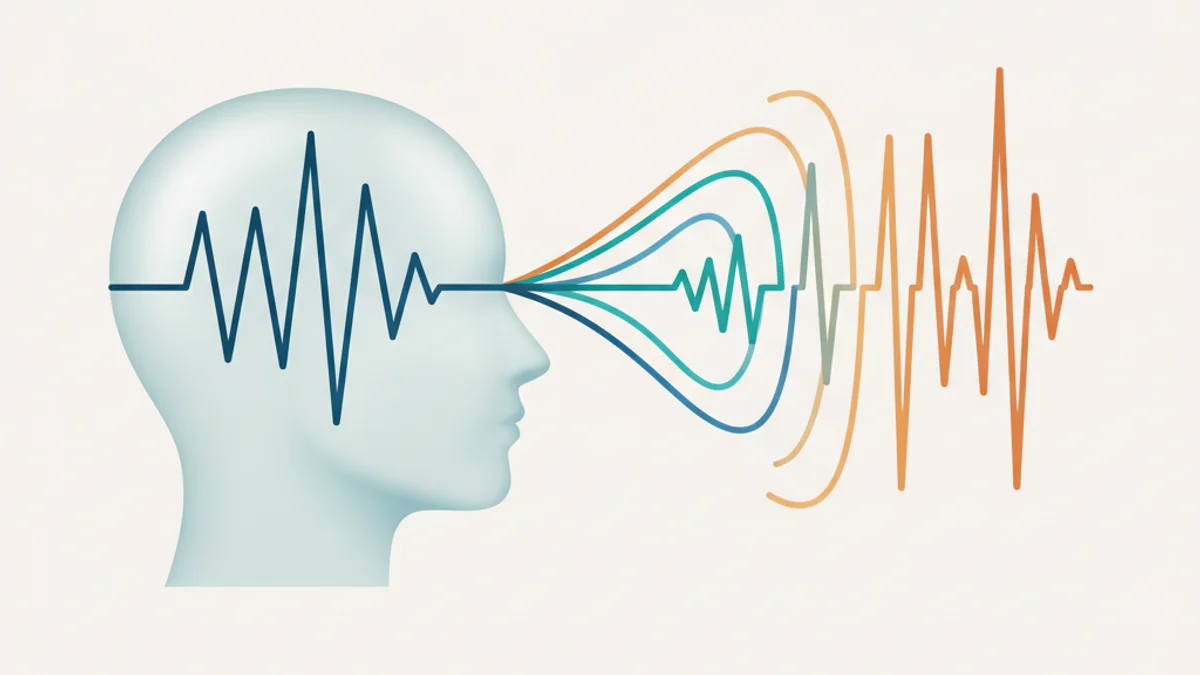
Lab studies of brainwave entrainment run under controlled conditions: calibrated headphones, a quiet room, and participants who often keep their eyes closed. An audio track playing while you work through an email inbox is a different situation. The frequency following response is a physical effect that researchers measure in the lab, but the everyday version of it offers no free benefit. It competes for the same limited attention your work needs. Rhythmic audio is a signal the auditory system keeps processing, and during work that demands high concentration, that processing is a cost rather than a boost.
The problem that group averages hide
The spread between individuals matters as much as the average result. Only a minority of participants show a reliable decline, and nothing in their psychological or demographic profile explains who they are. An average across a group hides that structure and produces a number that describes no particular listener. “The group changed slightly” is compatible with most people being unaffected while a subset gets clearly worse. Because the trials do not yet identify who responds or why, the honest answer to “will this work for me” is that you have to test it on yourself.
What the supportive studies actually measure
Studies with positive results usually measure a change in emotional or physical state, not performance during a task. A June 2026 trial in Frontiers in Psychology follows 66 college students with poor sleep quality. The researchers assign them pink noise with music, binaural beats with music, or a control condition: 30 minutes at bedtime, five nights a week for four weeks. They report better sleep and lower perceived stress in both audio groups. A July 2026 crossover trial in the Journal of Indian Society of Pedodontics and Preventive Dentistry tests binaural beats as a way to make dental treatment less frightening for children. A February 2026 review in Acta Neuropsychiatrica covers ten years of trials in adults aged 19 to 24, and finds small to moderate improvements in sleep, anxiety and cognition, with enough variation in design and enough small samples to keep the certainty low.
And the settings are specific: the half hour before sleep, a waiting room, a rest period. None of them involve complex professional work.
| Usage of audio | Intended goal | Evidence |
|---|---|---|
| Before sleep for 30 minutes | Shift into a calm state | Small trials report better sleep and lower stress |
| Before or during a stressful event | Lower anxiety | Small trials report a benefit |
| Background during difficult work | Improve performance | The 2026 replication reports a small decline |
The practical rule: entrainment for transitions, not as a soundtrack
The evidence points to a simple rule: use brainwave audio for transitions, like winding down in the evening or taking a break after a stressful hour. Using it as a productivity soundtrack is the part the data does not support. Judge binaural beats by how they change your mood or state, not by claims about focus.
Where this leaves eyes-closed sessions
Session protocols are built differently, because they do not ask you to perform a task while you listen, and that is what makes this finding less relevant to them. Sessions in the 6th Mind app run 6 or 11 minutes with your eyes closed, with stroboscopic light from the phone camera flash alongside the audio. They are designed as a pause in the day, not as a layer running behind something else. Whether the rhythm comes from isochronic tones or binaural beats is a separate question, and we cover the differences between them here. The same logic holds in our practice office in Sofia, where clinicians use sessions in their work with depression, anxiety and insomnia: a session is a tool for a specific, protected block of time, never a background track for other tasks.
Requirements for scientific certainty
The field needs pre-registered trials with active control audio and conditions that match the task to the audio. It also needs reports of how individuals respond, not only the group average. Until that data exists, the category holds one replicated result showing a small cost to performance during a task, and a set of small results showing changes in internal state.
Frequently asked questions
Do binaural beats work while studying? The evidence does not support that use. In the July 2026 replication, researchers report slightly worse performance on cognitive work that demands high focus. If you want audio while you study, instrumental music or noise masking comes with fewer unproven claims.
Does this mean binaural beats do nothing? No: the frequency following response is measurable. Small trials report less anxiety before medical procedures and better sleep when the audio is used at bedtime. The claim that fails is that the audio improves cognitive performance while it plays.
Should I stop using brainwave audio? As far as anyone can tell it is not harmful, but the timing should change. The evidence supports using it before sleep, after a stressful stretch, or as a session where you deliberately close your eyes.
Sources
- “Binaural-beat hype fails scientific scrutiny again” - PsyArXiv preprint, 2026
- “The impact of sound intervention on sleep quality and stress levels in college students: a randomized controlled trial” - Frontiers in Psychology, 2026
- “Impact of binaural beats audiovisual aid with or without conceptualized immersive projection experience on dental anxiety during dental treatment in children: A randomized crossover trial” - Journal of Indian Society of Pedodontics and Preventive Dentistry, 2026
- “Music and binaural beat interventions for young adults: A systematic review of effects on anxiety, sleep, and cognition” - Acta Neuropsychiatrica, 2026